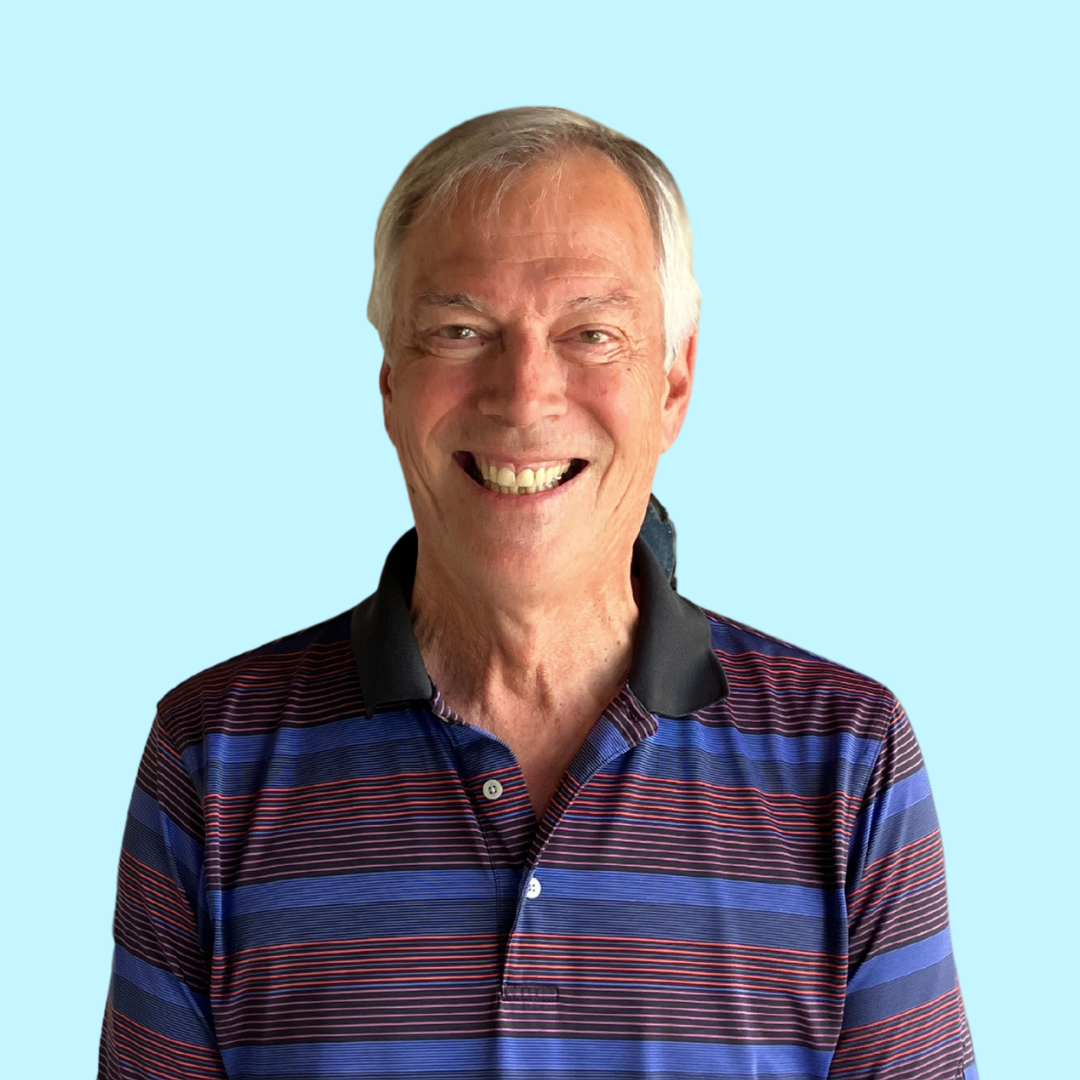
Brad Johns
How long have you worshiped at Saint Philip’s?
Since 2018.
What about Saint Philip’s attracted you?
The sense of community. People were kind and it was very active.
Were you raised in a faith tradition?
Roman Catholic.
How did you find your way to the Episcopal Church?
By way of a long and tortured path.
My wife, Jacqui, and I met in college. After we graduated we moved to Los Angeles and started attending the Unitarian Church. It was an easy way to get back into religion and faith. But Jacqui was Episcopalian so we eventually started going to an Episcopal church.
How have you been involved in the parish?
For a long while I mostly attended worship services. But a few years ago Jacqui and I joined the team to support the Kurdish family sponsored by Saint Philip’s.
We worked with the family for almost two years. We helped move them into their first and second apartments, helped with home repairs, and served as drivers to transport them to doctors’ appointments and school. It was quite a fulfilling experience.
You volunteer in new ways now, correct?
I recently accepted an invitation to join the Board of MEFT (Ministry Endowment Fund Trust). I have a degree in Economics and an MBA so I’m familiar with the type of work the Board does.
I’ve also begun volunteering with facilities. A few weeks ago Jacqui and I painted the restroom hallway off the breezeway. That was the appropriate skill level for us!
Do you volunteer beyond Saint Philip’s?
I do. One way I help is to advise and mentor mostly graduate students at the Eller School of Business.
In the past I also served as President of the American Marketing Association, and when Ally Miller was Supervisor she appointed me to the Planning and Zoning Commission. I did that for eight years—and was Chairman for the last two. (I was voted to be Chair unanimously because none of my Board colleagues wanted the post!)
What inspires you to donate your time?
I can help affect positive change in the community. And it keeps me out of trouble.
What’s a fundamental lesson you share with your business mentees?
A key thing to learn is how to say, “no.” We can’t do it all. The students who have the most trouble are those who sign up for everything. That means they can’t do anything well.
That sounds like you speak from experience.
I learned this lesson early when I landed at the University of Arizona.
I had an academic scholarship, was on the track team, and joined a fraternity. I quickly realized I couldn’t do all three. So I strategized.
Decent grades were necessary to keep the scholarship and to graduate. I also had a track scholarship that helped support the academic goal.
Based on that, it was pretty easy to realize that I had to leave the fraternity. I also need eight hours of sleep so that made leaving easier!
What did you do professionally before retiring?
The bulk of my career was with IBM. I started in Phoenix as a sales representative for the main frame division and then moved to Los Angeles when I was promoted to a marketing management job.
We moved to Tucson when a position opened up with the IBM Storage Systems Division here.
Since retiring I’ve done consulting work—primarily with data storage products.
How do you understand living out your faith?
It’s trying to really live the gospel in how I relate to other people.
For example, Jacqui and I buy manna bags at church on Sundays and hand them out to people on street corners. It won’t change their life but hopefully it makes their life easier for a few hours.
What’s one of your super powers?
My ability to listen and have conversations with people who have opposing points of view. (That’s probably how I became Chairman of the Zoning Commission.)
I’m able to accept where people are coming from and look for ways to reach agreements. And when that isn’t possible not to belabor it.
It goes back to being part of a community.
You exercised your super power professionally, correct?
At one point during my IBM tenure I was appointed to be the business team leader for a consortium that consisted of IBM, Hewlett Packard, and Quantum. Our mission was to work together to support the industry.
The rule was that we had to reach consensus. No majority rule. We had to reach 100% agreement. We all had lawyers and finance and marketing teams so achieving that was no mean feat.
But it worked. The consortium is still running today. I learned a lot during those years. We would argue in meetings and then afterwards drink beer together.
What’s something you once believed that you no longer do?
I grew up in the 1960s and ‘70s when the mantra was “do your thing.” The focus was on the individual.
But over time I’ve learned I can’t do everything by myself—and that I need to rely on other people even when I wish I didn’t. Now I want to participate in a community.
What’s something you look forward to in this period of your life?
The opportunity to travel more. When I worked, I spent at least two to three hours a day on the freeway, and had time for only two things: work and family.
So far Jacqui and I have traveled mostly to visit our daughters in Georgia and Texas. But later this spring we’ll go on a cruise down the Danube.
What’s a life lesson you keep being invited to learn?
I’m still learning to be more patient. Interestingly, in business it’s good to be impatient. My line of work needed results now. I was measured on what I did last. The question was always, “What have you done for me lately?”
But that isn’t as good in other aspects of life so I’m learning to reign in my impatience.
How do you relax?
I read.I’m working on the Kennedy family right now. I’ve read about John F. Kennedy and am now into Robert.
Are you Team Kindle or Team Book?
Team book. I like paper.
What’s something you’re proud of?
I’m proud of the family Jacqui and I created. Both our daughters have found careers they’re interested in.
What’s something you know now that your younger self didn’t?
A lot! I’ve learned that to really succeed in any endeavor you need to apply yourself consistently. You can’t do stuff half way.
And when I was in ambiguous situations and didn’t know the right thing to do, I learned to make the best assessment I could and just run with that choice.
What’s one of your core values?
Honesty.
What’s something you’re grateful for?
I’m grateful that I met Jacqui. This September we’ll have been together 48 years.
How did you meet each other?
In a bar that catered to college students. She and her roommate were sitting at a table and I broke the unspoken rule at the time that boys weren’t allowed.
We clicked pretty quickly. We met in July, were engaged by April, and got married in September.
What’s something about you that friends have said they really appreciate?
My even temper. It takes a lot to get me riled up.
What riles you up?
People who act in bad faith and aren’t honest.
What would you do if you won the lottery?
I would set up a foundation to fund meaningful projects around the world. It would have a staff that could follow up with what projects worked, which didn’t, and tweak things accordingly.
What causes would you want to support?
There are so many impoverished people in the world that I would focus on fundamentals: clean water and basic medical care.
For the past 20 years Jacqui and I have sponsored a child in Africa. Our small contribution helps provide some necessities. One year our child received a goat.