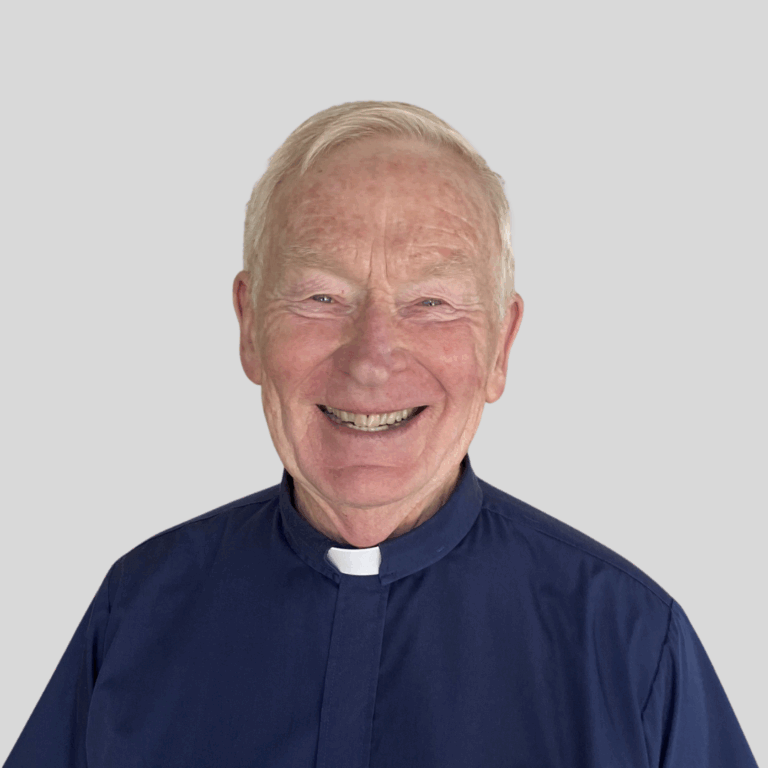
Richard Mallory
Dear Followers and Seekers,
In today’s Pentecost gospel from John, Jesus gives them the Spirit through his breath. He breathes it upon them, into them. John is doing something quite deliberate here. The Greek verb for breathing is used only one other time in the Septuagint, the Greek translation of the Bible, and that is in Genesis 2:7 when God breathes into the nostrils of the human creature and the creature becomes a living being.
John is staging a new creation scene. The risen Christ standing in the locked room is doing what God did in the garden. This is not just the giving of the gift. This is the reconstitution of humanity itself. The disciples are being breathed into existence as a new kind of human community. And the intimacy of it. He doesn’t speak the spirit from a distance. He breathes. You have to be very close to someone to breathe on them. This is the most physically tender moment in the resurrection narratives—closer even than the invitation to Thomas to touch his wounds. The risen Christ, whose body passes through locked doors, nevertheless gets close enough to breathe.
Immediately after giving the Spirit to them, he says, “…if you forgive the sins of any, they are forgiven them; if you retain the sins of any, they are retained.” The retaining possibility is an assessment of a tragic option for people for those who retain—who hold onto, who refuse to release are doing something that locks them in. They are holding the sin of the other as identity, as protection, as weapon. Retaining someone’s sin means keeping them in your debt. It means you remain the wronged party, which is a position that carries its own terrible power. It means the other person stays defined by what they did to you, which means you stay defined by what was done to you. The retention is mutual. You lock them in, and in the same motion you lock yourself in.
This is why the disciples in John’s account are behind locked doors. They are already practicing a kind of retention—holding fear, holding grief, holding the trauma of the crucifixion inside a sealed room. The locked doors are not just about the authorities outside. They are a picture of what trauma does to a community. It locks you in with what you cannot or will not release.
And the risen Christ walks through locked doors.
The spirit that is breathed into them is the spirit that can move through walls—and the invitation is to become communities that do the same. Permeable. Undefended. Capable of releasing what the traumatized self wants to clutch.
The breath is the answer to retention. You cannot breathe and hold your breath at the same time. Breathing is by nature a rhythm of release and reception—you cannot inhale without having exhaled, cannot receive without having let go.
John’s Pentecost is staged as a breathing. The spirit is not a a possession you accumulate. It is a respiration. The community that receives the spirit receives it as breath—which means it must be breathed out again, must move, must be released into the world, or it is simply not breath anymore. It is stagnation. It is a locked room with the windows sealed.
The forgiving and retaining passage is finally about which kind of community this will be. One that breathes—receives and releases, holds and lets go, takes in and sends out. Or one that locks the doors and retains, holds the sin of the other as identity, keeps the wound as foundation.
The risen Christ walked through the locked door to offer them the first option. God, Jesus and Spirit never force or impose. We make the choice.
—Richard