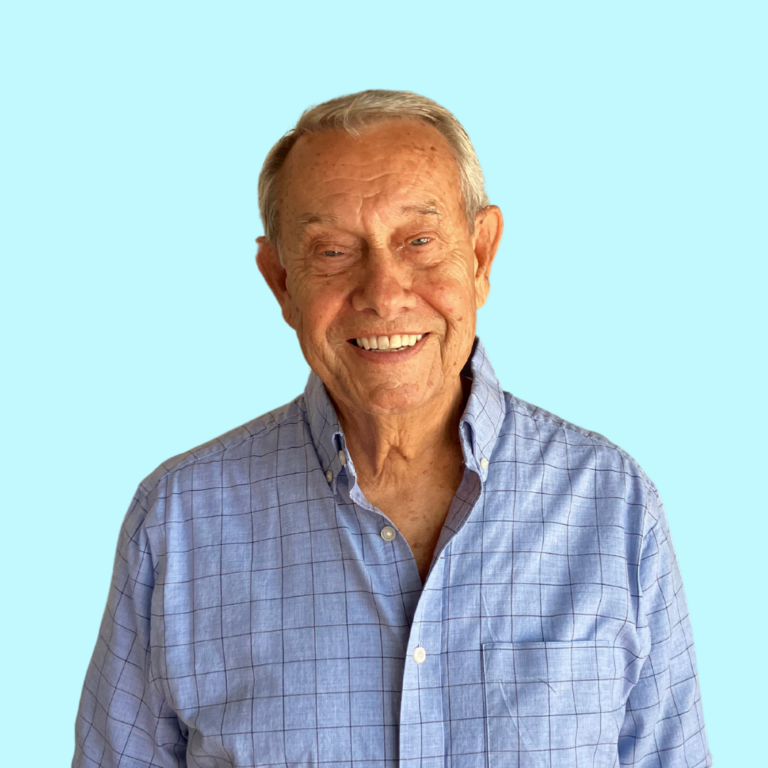
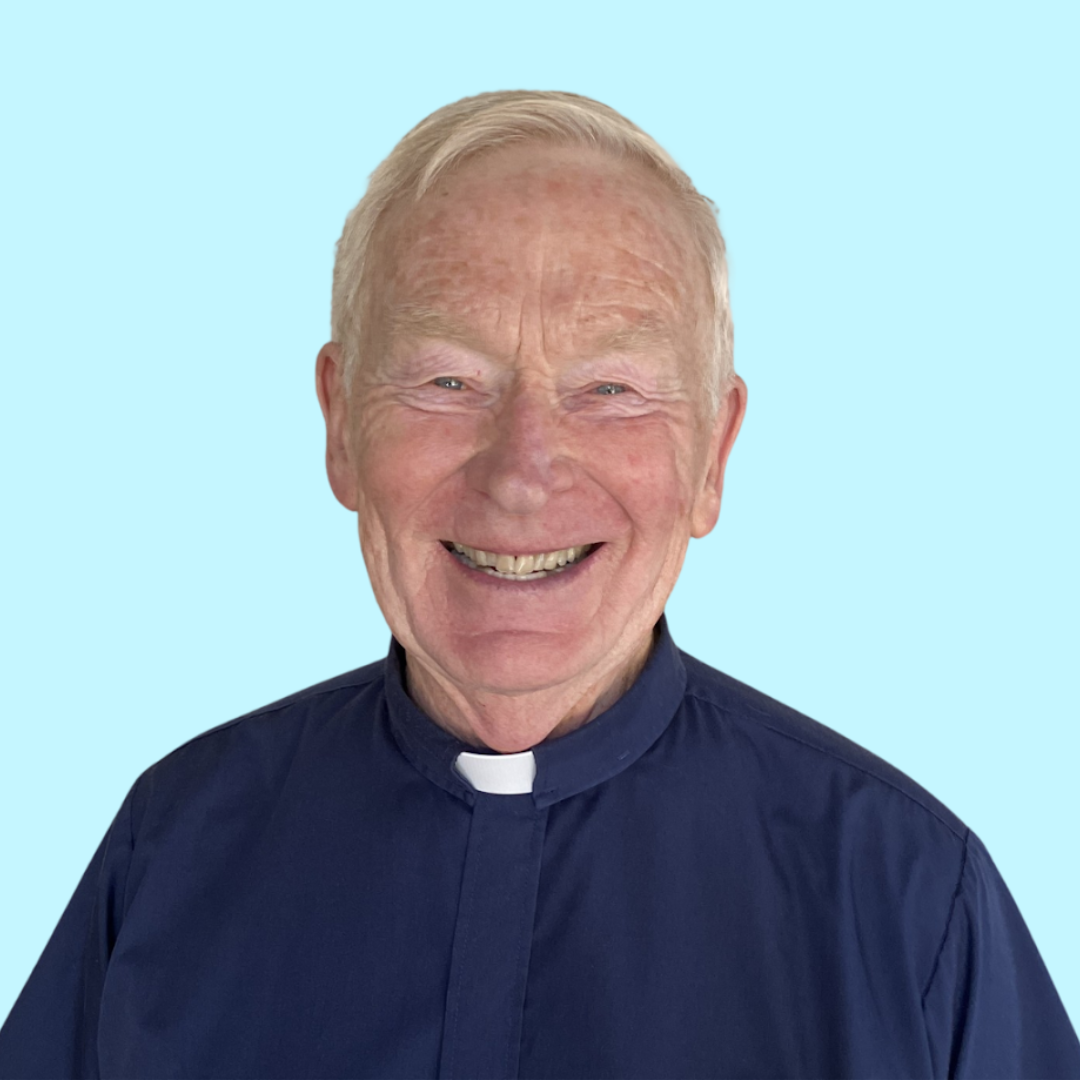
Richard Mallory
When did you begin as the parish’s Interim Rector?
In September, the day after Labor Day.
What about being an interim appeals to you?
It’s an opportunity to share what I know and what I’ve experienced. Nothing fancy—I just want to make a contribution.
As a newcomer to Saint Philip’s, what stands out to you?
Several things. The music program’s power and quality is remarkable. The courtyards and landscape provide a beautiful setting. And the staff’s high degree of professionalism and competency, as well as the collegial tone and cooperation they have with one another.
I’ve also picked up on what I think is a hunger for even more of the community that people find here.
How do you approach the role?
I think it’s important for me to learn about the parish, get a sense of its culture, and identify at what points I might be able to help its evolution.
I enjoy supporting the process around the edges. I’m not on the Search Committee (appropriately) so I will draw on my experience of having taught clergy pastoral counseling for more than 20 years.
Where did you teach clergy?
In New York City at a joint program sponsored by Reform Judaism’s seminary that partnered with the Postgraduate Center for Mental Health doctoral program.
Were you raised in a faith tradition?
Very much so! I was raised a Southern Baptist. My family worshipped every Sunday and the church we attended was the same one my father attended, as well as his father.
What led you to the Episcopal church?
Exposure to it. I was a chaplain in clinical pastoral education in Atlanta and my roommate was an Episcopal seminarian at Sewanee. Through him I met other young Episcopal clergy.
I was deeply drawn to the way they were conversing and sharing. It was a different culture, symbolized by having wine and the discussions they had. I was drawn to the vitality and excitement they exuded. Something inside me clicked, and I thought, “I want to join up with this tribe!”
How did your family respond?
With great concern. I think it hurt my mother deeply.
What led to your ordination?
When I went to seminary I had no intention of being ordained. I wanted to be an Old Testament professor.
But the times were different. My rector decided I would get ordained and scheduled an appointment for me with the Bishop. I told him that I liked CPE and the Old Testament and the Bishop said, “Great! Let’s get you ordained.”
What did you do after graduating seminary?
I studied to become a psychotherapist. I found it so meaningful and helpful myself that I wanted to be able to offer that to others.
What’s a belief that you let go?
That my family was perfect. I didn’t know that it wasn’t until I was 19.
What led to that discovery?
Being in counseling.
I was in a bit of a crisis and was fortunate enough to receive counseling from a 29 year old clergyman at Wake Forest Baptist Church. He was in training but the work he did was extraordinary—especially given his inexperience.
He was a messenger for me. One translation of “angel” is messenger. I was fortunate to cross paths with this particular one.
If you got a do-over for a decision in your life, what would it be?
I wouldn’t have returned home to Anniston, Alabama.
After two years at Union Seminary I really wanted to teach the Old Testament. The only school where I found an opening was in my hometown. The experience of teaching high schoolers was very gratifying but the adage, “you can’t go home again” is true.
When I left for seminary I was the first person in my family to cross the Mason Dixon line. No one could understand why I would want to leave our town or even the south. My interest in going anywhere was strange, foreign, and unfathomable to everyone.
What propelled you to leave?
My desire to explore and find a bigger world was greater than my fear.
What are some of your core values?
Empathy and compassion—which partly comes out of my own suffering.
Everybody can develop compassion as they process their own suffering. It’s a word often avoided in our society yet it’s very real.
Our culture is a death denying one which means it also denies suffering. We’re more of a Disney World culture than we are a realistic one. The result is that people are socialized to marginalize their pain and suffering, and deny it.
I think many people are raised with an expectation that if they follow the formula (make good grades and go to a good college) then they’ll be on the golden road and set for life. Most of us are rudely awakened and learn that’s not true.
You experienced that yourself, correct?
I did. My first wife died of breast cancer just before her 50th birthday. Our son, Eric, was only 16 years old.
How did you meet your current wife?
I was the interim at St. Michael and All Angels Church, and Pam was a parishioner.
I was a bachelor for a very long time, and wasn’t looking for a relationship. In fact, I was in the best relationship with myself I’d ever been in and didn’t want anyone to mess that up.
However, life transpired. I met Pam and it became pretty obvious that we would marry. Our wedding was in 2018.
What’s something you’re grateful for?
That I have family and friends who will call me out when I get too self-involved.
There’s a universal human need to be called to account by others. None of us can do life alone. If we do, we’ll be cheated.
What’s something that scares you?
I find intense conflict—when people go after each other by name calling, for example—scary. I’m inspired by people who are cool, calm, and collected in the presence of intense conflict.
What’s something you’re proud of?
I’m proud of having taken advantage of the opportunities that came my way. I’ve had an incredibly rich education and I’m also grateful I had the ability to receive it and learn from it.
What’s something you know now that your younger self didn’t?
As a younger person I never realized that life could be so big. I wouldn’t have dreamed I’d go to New York City. Or come to Arizona. All along the way life has kept getting bigger and bigger.
How do you refresh yourself?
I love to hike. There’s an unmarked trail in Sabino Canyon that follows a ridge line and is very steep. The cardiovascular workout is good and the views are beautiful.
It’s uplifting for me to be in that space. The air exchange between plants and humans, the occasional desert tortoise I get to see, and the mountains. That’s where important things happen in the Bible. Think of Mt. Sinai and Mt. Tabor.
What’s something your friends say they appreciate about you?
That I’ve retained the essence of my inner child. I’m able to wonder, have imagination, and be curious. That’s in all of us, though, provided we can survive our socialization.
I’m reminded of a time when I was hiking with a friend and fell. I dislocated my artificial hip and couldn’t move.
Five strong men from Search and Rescue came with some sort of buggy. They loaded me in, juiced me up on drugs so I could manage the pain from all the jarring, and somehow managed to get me down the trail.
I remember lying on my back, looking at the clouds, and thinking, “This is a once-in-a-lifetime experience so I better enjoy it!”
What’s one of your guiding principles?
Integrity. I think it’s very important to honor agreements.
What would you do if you won the lottery?
I’d gift my seminary $100 million. And then I’d start a foundation to address hunger and maybe peace studies.
What’s one of your super powers?
I’m highly emotionally aware.
What’s one of your strongest memories?
It was a key moment in my growing up.
In the Baptist church people are invited to walk down the aisle during the final hymn and accept Christ and join the church.
I was nine years old and told my mother that I was going to go forward. She said I should wait until the following week so my father could be present.
I remember thinking, “Well, it’s his tough luck that he’s not here. I want to go now.”
And then I received the most powerful non-verbal message I’ve ever experienced. My grandmother made clear, “You go, boy!” And I went forward.
Where was your father?
He was a sometimes gambler. The saying around town was that his real office was in the Country Club card room.
What’s a fun fact about you?
I’ve run five marathons—all in New York City. And I love to dance.
During one marathon there were 20 bands along the route. One was so good that I had to stop and dance. That was more important than the time lost to enjoy the music.