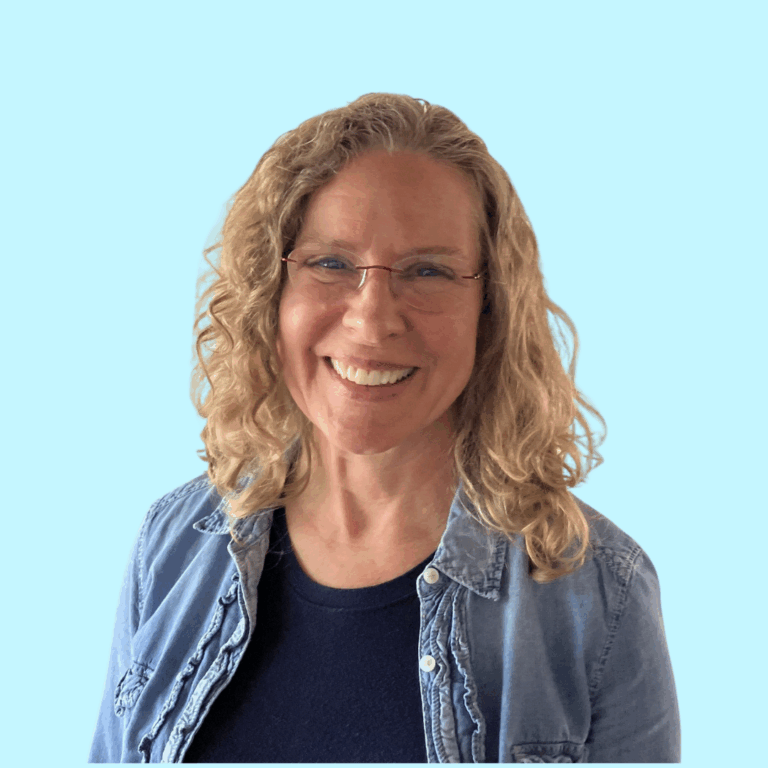

Renee Clift
How long have you worshiped at Saint Philip’s?
For about 16 years
Were you raised in a faith tradition?
I grew up attending a Presbyterian church and was active in both Sunday School and the children’s choirs.
How’d you find your way to the Episcopal Church?
It was a compromise. My husband, Richard, was raised in the Roman Catholic church. After our second son was born, we decided it would be a good idea to attend the same church. St. Andrews Episcopal Church in Kingwood, Texas was welcoming to adults from all faiths and to children, and we found a home there.
What about Saint Philip’s appeals to you?
When Richard and I worked full-time (and couldn’t be as involved as we are now), it was the music that drew us in.
But after I retired, Cecilia Hunter invited me to join the Altar Guild. She was the bridge that helped me move from simply worshiping on Sundays to volunteering. Over time, the increasingly welcoming and inclusive community that Saint Philip’s has become led both of us to become more and more involved.
How do you volunteer?
In addition to serving on the Altar Guild (which I did when we attended St. John’s Church in Urbana, Illinois), I also help prepare the first Sunday meals and take food to people who request support from Meal Train. In January I was elected to the Vestry.
What do you enjoy about being on the Altar Guild?
I enjoy working with others on one of the four Altar Guild teams. I appreciate the responsibility we’re given to prepare for the services. Serving at Saint Philip’s means much more than setting up for and then cleaning after services.
We make sure that linens are clean and ironed, silver and brass are polished, candles filled with oil, that the kits that the Lay Eucharistic Ministers pick up every week to serve people who cannot attend in person are cleaned and filled, and that acolyte’s robes are clean and fresh.
We serve at all the Sunday services, at the Tuesday Healing Services, and at weddings and funerals.
Who might consider exploring the Altar Guild?
Anyone who wants to contribute to the tasks I listed. We’ve become more flexible so that parishioners who have full-time work, parenting, or care-giving responsibilities can participate.
Several children participate with a parent and we hope that some older adolescents might also want to join. And it’s not just work. There are opportunities for fellowship and cross-generational conversations.
Can you think of a decision you made that made a real difference in your life?
Going to graduate school to get a PhD. When I finished my degree in Educational Administration, I realized that there was a world of ideas that I wanted to explore more fully.
I went from being a high school drama teacher in a small town to a part of a national and international community devoted to preparing future teachers and supporting teachers throughout the profession.
What did you do professionally before retiring?
I was a professor at the University of Illinois for 20 years. I left because I was invited by the then Dean of the College of Education to join the University of Arizona.
He asked me to build on and improve the professional preparation programs (teaching, counseling, school administration, etc.). It was a wonderful experience, and I was able to meet and work with educators from across the greater Tucson area.
What engaged you about the work?
I have always liked teaching. Bottom line, teaching is a people profession so, regardless of what level one teaches, it’s still always about people.
When I added becoming an educational researcher to my skill set, I entered a profession where I got to ask questions, search for possible answers and play with ideas. I also enjoyed developing a national and international network of colleagues.
What’s something you’re proud of?
It’s less about pride and more a deep gratitude for our two sons. They have matured into kind, thoughtful, and caring parents and professionals.
What’s something that really engages you right now?
Aside from being a grandmother, it’s feeding people’s souls by feeding their bodies. Richard and I are volunteers with San Pasqual’s Cocina—a ministry within the Pastoral Care Commission.
Preparing a meal can be challenging if you’re experiencing some sort of loss, illness, or just too much life. Often we cook, but sometimes we purchase the food. It’s less about a homemade meal and more about letting people know they’re not alone and helping them get through a challenging time.
What’s something you find challenging?
I’ve thought a lot about this and think I’ll say maintaining my optimism. Now that I’m retired work doesn’t occupy every living moment for me, so I have more time for contemplation.
I really appreciate having time to think about larger issues instead of just the immediate problems at hand. The Daily Bread reflections help me think, reflect and sometimes meditate on my responsibilities as a Christian.
How does your faith help?
It offers a view of the world that takes me beyond myself, our current history, and my current perspective. It reminds me of a broader view of God’s purpose and God’s timeline. It provides many current examples of where the world and its people are truly good and where there is forgiveness.
What’s something you know now that your younger self didn’t?
That I don’t have to strive to be good at everything. There will always be someone who’s more interesting, smarter, or better at something than I am. And that’s good because I can learn from them.
What difference has learning this made?
I’m not as anxious.
What’s one of your core values?
Inclusiveness. I think it’s important to accept a wide variety of opinions, of tastes, even of choices, and to work hard not to be judgmental.
What’s one of your guiding principles?
No act of kindness is ever wasted. In any community—whether family, academic, church or social—people can sometimes be unkind. And in those moments, any act of kindness that can help mitigate an unkind act is important.
What’s something you’re grateful for?
My family, the Saint Philip’s community, and having lived an interesting life.
What’s one of your super powers?
I’m a productive worrier.
How is that a super power?
I was a high school theater teacher. There is sooooo much that can go wrong before and even during a production. I learned to think through as many potential problems as possible before opening night because teens’ self-images and egos are on the line. It is important that the audience applaud enthusiastically at the end of the evening!
From academic program reviews, to writing, to editing, to setting up for a worship service, I really try to pay attention to details, to doublecheck when possible and to help things go smoothly.
What’s something about you that friends have said they really appreciate?
That I check in to see how things are going, and to bring them food—if desired.
I love to bake and cook for others. Richard and I have fun doing that together.
What’s something you’d like to do that you haven’t yet?
There are a lot of places I’d still like to visit. For no rational reason, I would love to go to Russia, Sicily, Japan, South America and more.
What might people be surprised to learn about you?
That I love theater production.
How do you like to relax?
I like to swim, walk, and read.
What do you like to read?
My tastes are pretty eclectic. If you recommend something, I’ll do my best to read it. From mysteries to thoughtful discussions of history or politics or current events—they’re all good.
What have I not asked that you would like people to know?
I believe that the intergenerational focus at Saint Philip’s is a real strength. Younger folks can appreciate the experiences of older folks who have lived through a different period in history. Older folks can learn about new trends and new technologies. We can all experience the joy of children and of worshiping as a community.