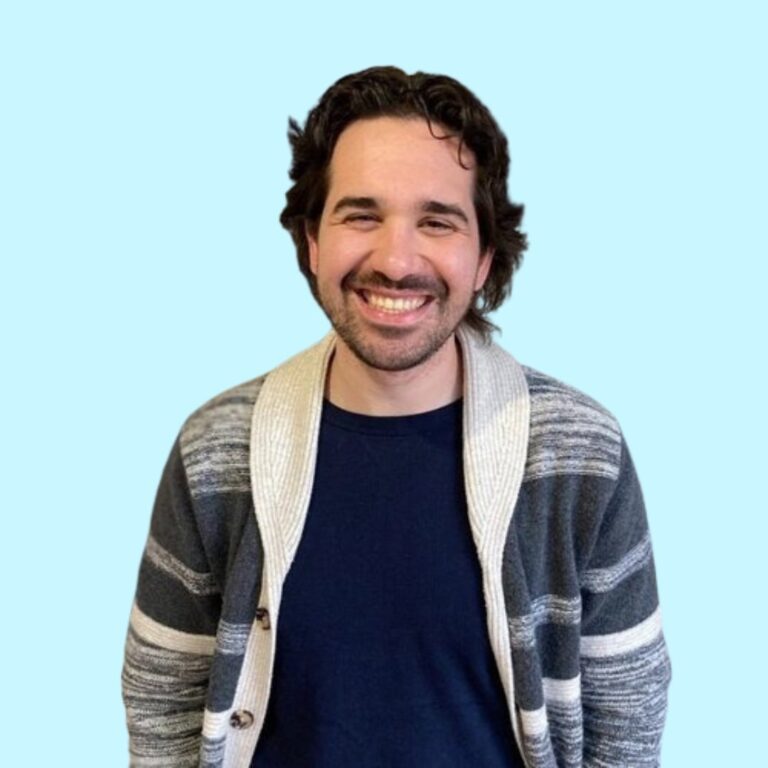
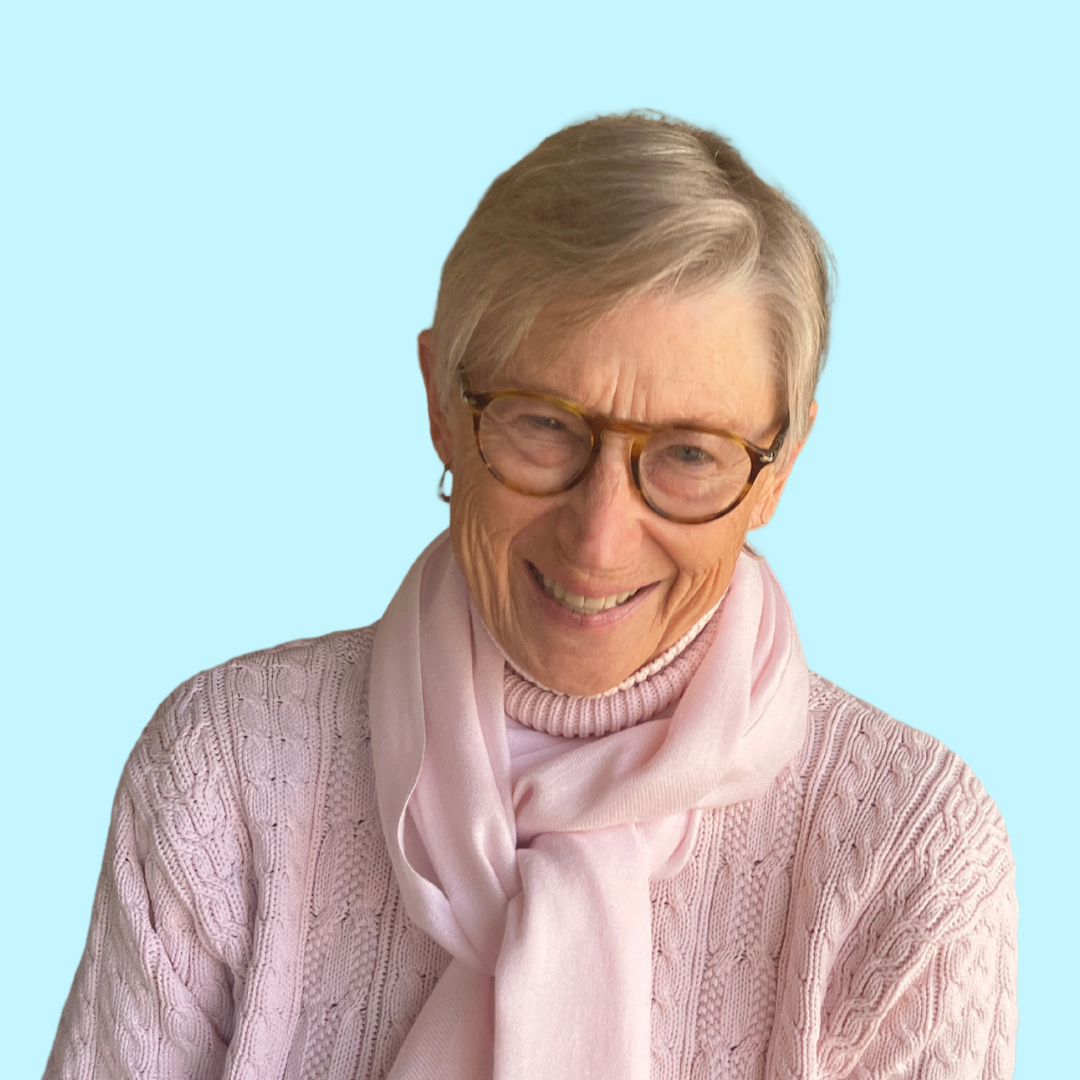
Mary Cutting
How long have you worshiped at Saint Philip’s?
I’ve been here for 10 years.
What’s the biggest change in your life from this time last year?
Probably being involved at Saint Philip’s in a different way.
In the past, Fr Robert asked me to handle quite a few projects that had to do with focus groups or strategic planning.
Now I serve as a Lay Eucharistic Minister with the Off-campus Worship Ministry. Parishioner Virginia Kat and I alternate leading a 10:00am liturgy at The Fountains Retirement Community (at La Cholla and Orange Grove).
What’s meaningful to you about participating in that ministry?
It’s where I come closest to feeling my faith. I’ve thought about why that is and I think it’s because I’m with the 30 or so people who come to that service every Sunday.
I’m a cradle Episcopalian so while I loved the words I spoke during the Eucharist I didn’t really feel them. Because The Fountains worshipers are older, I think about what the words mean and remind myself try to speak clearly and slowly.
Helping lead the liturgy reminds me to feel every word in each prayer.
And I should admit that I also enjoy being part of the group of volunteers who make this ministry happen. The Fountains community has become very important to me—and on the occasions I can’t be there, I miss them.
Is there a rule you break regularly?
Yes! We use real candles at the Fountain’s Sunday service.
What did you do professionally before retiring?
A variety of things. I got my MBA at the University of Washington in 1981 and then managed law firms and other professional service companies such as public relations and accounting firms (with 60-70 employees).
One of my clients owned a high-end custom cabinet company, and I worked for him for three years.
But my favorite job was my last corporate assignment: I trained and developed managers and leaders for McKinstry, a large mechanical and electrical engineering and construction company headquartered in Seattle.
Why was that your favorite job?
I love building things. That was one of the reasons I loved the cabinet job; I learned how to make what I sold.
The other wonderful thing about working at McKinstry was that it allowed me to be a bridge between technical and non-technical people.
What was so important about being a bridge?
Any time a project went sideways it could be tracked back to bad communication.
One of my “Pillars of the Universe” when teaching managers to be good leaders was to encourage them to use “the four humble sentences”:
I’m sorry.
I don’t know.
I was wrong.
I need your help.
I found them in Louise Penny’s novel The Cruelest Month and they’ve always stuck with me.
What’s something that’s changed for you over the years?
Until I was 35 years old, I didn’t have an image of Christ and how he could fit into my life. But at 35, I let go of my intellectual understanding and focused on feelings.
How did that happen?
I was between marriages and dating a politician. He was so totally focused on his job that he let me down constantly. So I decided to go by myself to Cancun, Mexico.
I was lying on the beach and thinking about my boyfriend when it dawned on me that he would never be everything I wanted. And then it popped into my head that the only thing that could connect me to God is Christ. He is the bridge.
Christ may or may not be the son of God but he is a bridge between the universal goodness and me. That realization helped me let go of the fantasy that there was a perfect man.
What difference did that realization make?
It helped me step back from snap judgements and begin to see the men—and people—I met for who they were, not who I wanted or needed them to be.
What does your faith mean to you?
It means safety. My faith has a pretty solid foundation, but the day-to-day part comes and goes. But I always know I have it.
I think one has to want faith because it doesn’t magically hit you. I had the epiphany I did on the beach at Cancun but I still have to live into that understanding.
Are you trying to introduce a new habit into your life?
Praying.
I consider thinking deeply about someone a form of prayer. And I do that throughout the day. One example is when I see someone who is homeless. I would like to stop and help everybody but I can’t. So I imagine Christ holding that person in His arms. That’s my prayer for that person.
The discipline of praying the daily offices in the morning, at noon, and in the evening appeals to me. On the rare occasion I’ve managed to do that I feel good about it. But it’s very hard for me to keep it up.
What’s a life lesson you keep having to learn?
There are so many! The first that comes to mind is that self-discipline is good.
I feel good when I exercise self-discipline. That’s one reason I liked my last job. It was all about projects that had deadlines. Left to my own devices, though, I’m tempted to just read all day.
What gets better as you get older?
I know what I like. That means I no longer pretend to like things I don’t.
Is there someone who inspires you?
Right now Timothy Snyder inspires me. He’s an American historian who specializes in the history of Central and Eastern Europe, the Soviet Union, and the Holocaust.
His book On Tyranny: Twenty Lessons from the Twentieth Century is a short 126 pages that offers a series of instructions on how to combat the rise of tyranny.
But Prof. Snyder inspires me not just because of what he knows. It’s also what he does. His friends in Kyiv, Ukraine told him their most urgent need is equipment for anti-drone defense. So that’s what he raises money for.
What’s something you’re proud of?
I’m proud of my commitment to my marriage. Hal and I have been married for 37 years.
Love isn’t Valentine’s Day. My experience is that love isn’t always apparent; it often lurks in situations.
What’s something that scares you?
I’ve worked on this a lot but I’m still scared of being alone. Not as much as I used to be but that fear is still there.
But then I remind myself that so long as I have a library, a church and a swimming pool, I will be able to make a life that is fine.
What’s something you know now that your younger self didn’t?
The value of presence. The ministry of presence.
I know now how important it is to be with people—in the moment. I can sometimes want to take over a situation and have learned that can feel overwhelming to people. But when I can remember to just be present, it’s better for everyone.
How did you learn that?
By helping my 15-year-old Siberian Huskey, Baron, have a good death. I held him in my arms when he died. Doing that taught me that being with someone when they die is a privilege. It’s a gift.
My experience with Baron made me not fear death. I was with my father when he died, and I held my brother when he had his stroke and fire trucks and ambulances surrounded us.
Do you have a guilty pleasure?
Dairy queen chocolate soft serve in a dish. On some occasions I bring it home and add amaretto and nuts.
What’s one of your core values?
Kindness.
The composer Philip Glass wrote a song with Linda Ronstadt. There are seven qualities they sing about: bravery, kindness, clarity, honesty, compassion, generosity, and dignity. That’s the sign I make and take to protests.
What do you do to relax/replenish yourself?
I swim over a mile pretty much every day of the week. I also binge watch British detective procedurals. And I iron. I find that very relaxing.
What’s something that people might be surprised to learn about you?
Well, since I live in the desert, I’ll mention that I lived on a sailboat for six years in Washington state (the first two years in Port Angeles and then Edmonds the last four).I should add that my first husband and I bought our liveaboard boat never having sailed before.
How did that come about?
My brother and my husband’s brother were both into sailing, and we were influenced—and infected—by their excitement. I didn’t have anything more interesting going on, and I also didn’t want my husband to resent me keeping him from living his dream. So we jumped in.
What was the experience like?
The first thing I learned was that a boat needs to be commissioned. That means it arrives with the basics and everything else has to be added. That took me three weeks—with help from our generous new boating community.
The sailboat was like our child and those years were wonderful.
How do you feel about living in the desert after being on the water so many years?
I miss sailing but I do like Tucson. And we have a very sincere little pool that helps. We don’t cover it in the winter so that we can see the water every day.
Have you ever taken a leap of faith?
Yes! I sailed TOCCATA, my 26’ Yamaha sloop with an inboard diesel engine, by myself from Seattle, Washington up to the San Juan islands. People thought I was crazy to do it alone but I didn’t see why I couldn’t!
What’s something you’d like to do that you haven’t yet?
I would love to sail in the Greek islands.
What’s a fun fact about you?
I grew up with a very intellectual mother and no tv. The rumor around town was that she tied my brother and me up on Saturdays and made us listen to the Metropolitan Opera. The rumor about being tied down wasn’t true but she did expose us to opera.