
From the Rector
Dear Friends in Christ,
I was remembering this week two passages from a book I love. The book is Elder Paisios of Mount Athos by Hieromonk Isaac.
Elder Paisios was one of the revered Orthodox monks of the twentieth century. He lived in relative obscurity on Mount Athos but over time became a beacon of a certain kind of ascetic faithfulness that is vanishingly rare.
There is a chapter on stillness that I love.
In one portion, his biographer writes, “When the elder was looking for a deserted place outside the Holy Mountain, he was shown a beautiful cave. The immediate area was quiet, but he was told there was a lot of traffic noise from a road in the distance. ‘That won’t bother me’ he replied. ‘I can hear it or not hear it, depending on what I want, and I can see the cars or not see them. What’s worse is the other noise—when people try to entangle me in this or that.’”
It does seem now that a rediscovery of stillness is crucial.
We’re all caught up in cycles of noise. Political noise. Work noise. Social media noise. Even the whirring of all the little fans in our house. When the power goes out in our house I’m always suddenly aware of real silence as the refrigerator stops whirring, the air purifier turns off, the humidifier stops, the little fan in the laptop goes quiet, and more.
Suddenly it’s not just quiet but still. Things come to a stop. Or they seem to. More specifically, the artificial things come to a stop and the natural noises begin to get our attention again. We hear some bird call. Maybe the noise of a lizard scrambling on a rock. Maybe our cat yawns or a dog barks in the distance. The real world reasserts itself in the stillness and reminds us that it is not still at all but deeply and powerfully alive.
We can see it or not see it. But we inevitably get entangled by the noise again. We soon forget that a whole, real, thrumming world is alive beneath the incessant whirring of the artificial noise all around us.
“Stillness is prayer by itself.” This is a reflection by the elder. He always sought to find refuge from the distraction of the world because stillness is a “harbor of mysteries.”
Stillness sounds easy. Just stop moving, right? But it’s far more than that.
It’s not only the work of being rooted but also the work of not letting ourselves be uprooted by every gust of wind. We have to have a certain stillness in our spirit for the quiet of the world to matter. If we go into the desert with a radio, there’s not much room for the quiet to speak.
I find we’re all taking a radio with us wherever we go. We’re all allowing the noise of the world to drown out any stillness. We can’t hear the wisdom of a place or a moment or an elder or a child because we bring our noise with us.
Stillness is prayer by itself.
Recovering our ability to be still and know that God is God is a crucial discipline.
So much artificial noise is unfolding all around us and it is incumbent on the Christian to carve out space where stillness can do its work and, importantly, where we can permit ourselves not to be drug into all the entanglements that other people try to draw us into.
Creating these spaces of stillness plants a stillness in us if we will let it—then we can find that ability to see the cars or not see them. We can find the ability to see what’s important and to set aside the untruth and anxiety that are always gnawing away at our soul.
This is not self-absorbed work. On the contrary—this is God-focused work. It is work that opens us up to the movement of the Spirit which is the least self-centered we can be.
A loving and living awareness of the quiet world roaring away beneath the noise of life is a way for us to reconnect with what is holy, life-giving, and true. It reawakens in us the realization that while the world fights over the right to be louder we can find deeper purpose in the quiet.
In that stillness, we are called back to our true life in Christ and there is no more fearsome thing to the Devil than a quiet soul. Because there is a soul in Communion with God. There is a soul that knows its purpose. There is a soul that can see with the eyes of faith, hear with the patience of hope, speak with the timbre of love, and laugh with the holiness of joy.
I’ve come around to that second passage I mentioned at the beginning. The chapter on stillness ends with Elder Paisios saying, “The revival of the Church will come from the life of stillness.” I think we would find that it is not just the revival of the Church but of ourselves and perhaps our culture, too.
Yours in Christ,
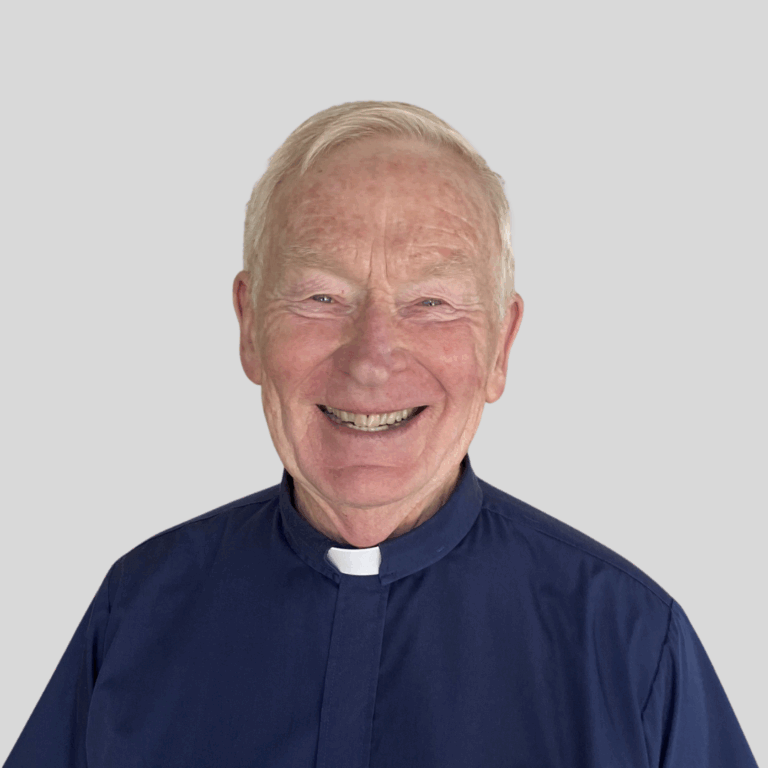
—Fr Robert