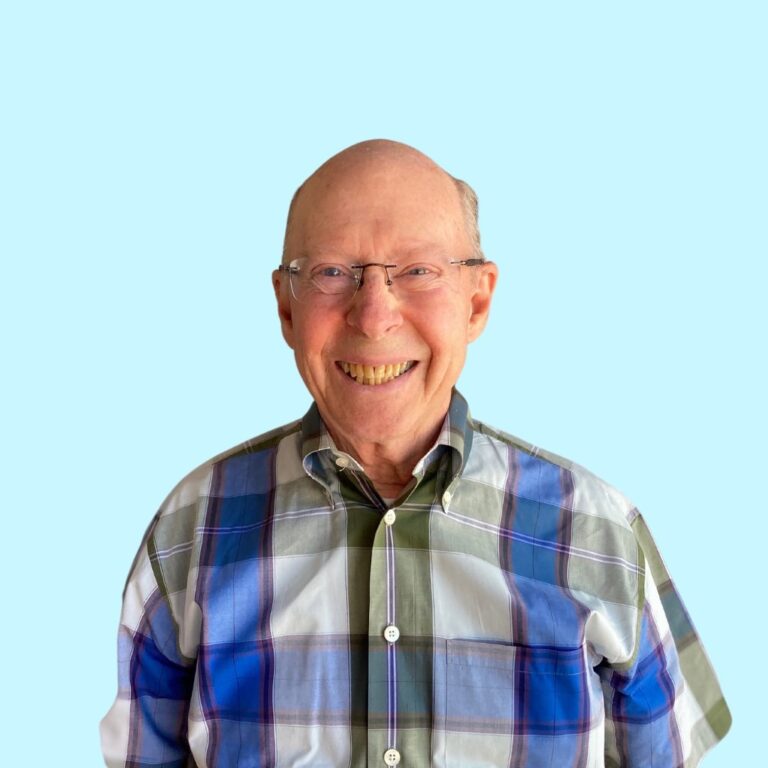
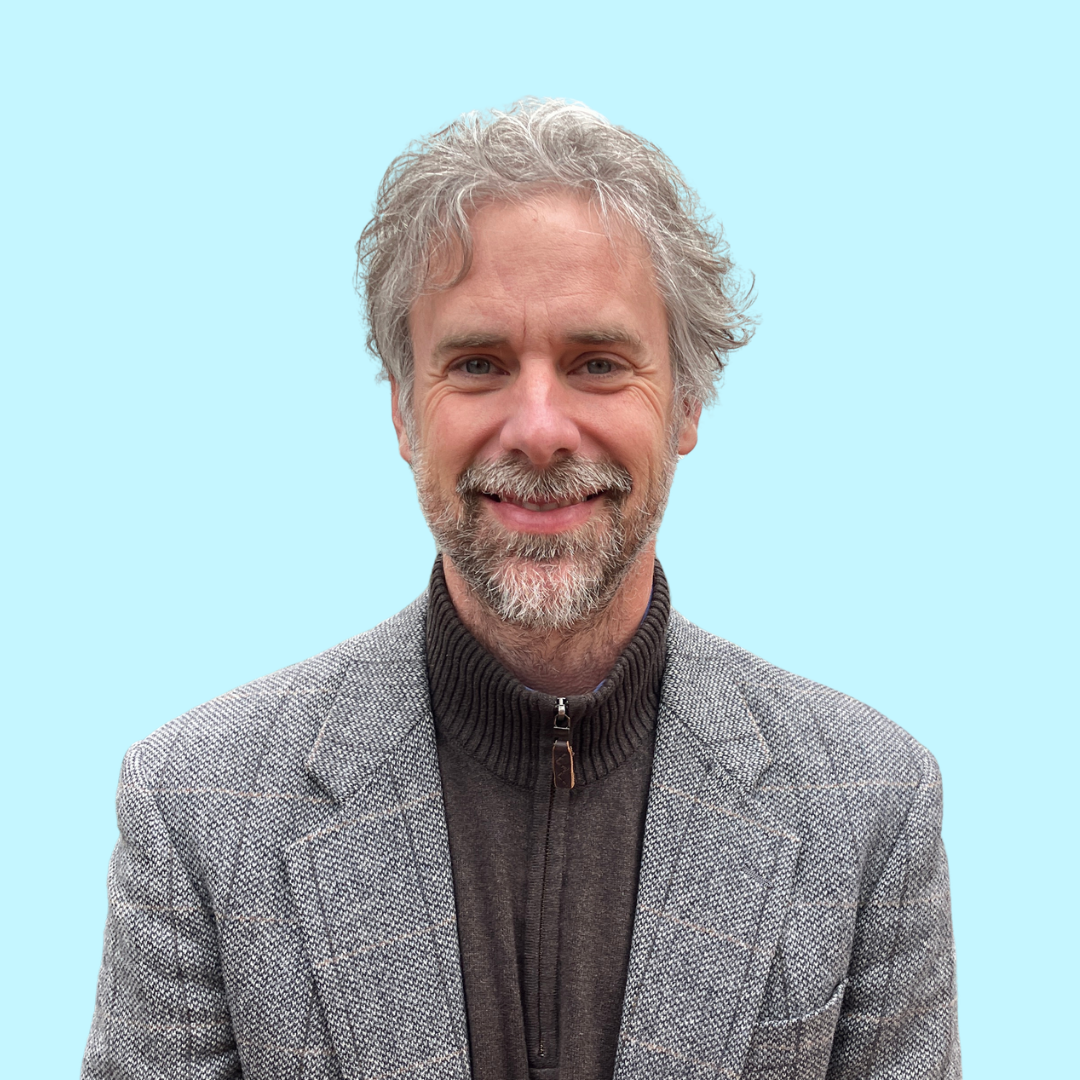
Courtney Friesen
How long have you worshiped at Saint Philip’s?
Since the fall of 2017.
Were you raised in a faith tradition?
From the time I was young I was raised in the Mennonite church. My wife, Becky, and I made our way to the Episcopal Church when we lived in St. Paul, Minnesota.
Why the Episcopal Church?
We were drawn particularly to the traditional liturgy and inclusive approach to people in the community. The intellectual rigor and the value placed on tradition within the context of a 21st century world appealed to us, as well.
It also helped that we moved to England and found a home in the Anglican Church. That solidified our appreciation for the tradition of the wider Anglican Communion.
And why Saint Philip’s?
Its vibrant programs for children and music were big factors. And it didn’t hurt that the church is close to our home.
How are you involved at Saint Philip’s?
I’m in my last year of the three-year Vestry term. I also participate in the Parents’ Formation group, and am a choir parent. All three of our boys are choristers. And I make occasional presentations at church forums.
Your children are also very involved. Why is that important for you?
First off, they really enjoy coming here. They volunteer as acolytes, choristers, and now that they’re older they also help with Vacation Bible School and the Christmas pageant.
All these opportunities to be involved let them contribute to the parish as active members. That, in turn, creates a sense of belonging and investment in the life of the church which allows them to take some ownership in its growth and vitality.
What makes you feel like you belong to this community?
The many opportunities to volunteer and participate in leadership capacities. I think the clergy take an active interest in parishioners’ wellbeing and including them. Certainly, the focus on families and intergenerational connectedness is important.
And the worship services make a difference. I find the preaching very meaningful; it meets people in the moment and is challenging, encouraging, and inspiring. That’s always been a big draw for me.
What do you do professionally?
I teach at the University of Arizona’s Department of Religious Studies and Classics. My specialty is the Ancient Greek language, literature and culture, and the New Testament and early Christianity.
Did you plan this career?
Not exactly. I started out early in my adult life studying at seminary. My pursuit of a Master of Divinity degree introduced me to the study of ancient and biblical languages. I then transitioned into the academic study of the ancient world.
What captures your interest about what you do?
The study of antiquity is inherently interesting for the sake of curiosity and the rigor of learning. While the societies I study are remote, distant, and in many ways different from our own, they also function as a cultural inheritance that we draw on—whether we know it or not.
The core area of my research is the moment of Christianity’s origin and the place this occupies on the stage of history. I study how Christians adapted Greco Roman cultural values for their own interests, the ways they drew from literature, and how they re-deployed familiar rituals to express their own ideals focused around the revelation of Jesus.
What’s a belief you’ve let go of?
When I started out in higher education as a serious enterprise I imagined I might be able to figure out a level of religious certainty. I hoped to establish the truth with clarity and historical authenticity.
But thinking more and more about things over the years, I now believe that the lack of certainty isn’t something to fear but, rather, something to embrace.
Why something to embrace?
Because not knowing is the nature of being human.
To be fully human means to search for knowledge and certainty without necessarily experiencing the satisfaction of achieving either. And to be in a community with other people who participate in that same quest establishes a common interest in life together.
What might people be surprised to learn about you?
After our first year of marriage, Becky and I spent a year in Africa to work as volunteer teachers in Ethiopia. That was definitely a big leap of faith.
How would you describe that experience?
It was unsettling, eye opening, and inspiring.
We saw the beauty of a culture radically different from ours. The lack of resources that we have at our fingertips here was startling. And yet people found ways to thrive and care for each other, and to be joyful and happy amidst different sorts of circumstances.
What’s something you learned from your time in Africa?
I learned that generosity doesn’t require abundance.
The gifts that people can offer each other are much more profound than mere financial resources. People’s love and compassion for each other was a model for us.
Is there anything unique about this chapter of your life?
Becky and I are on the cusp of all three boys graduating and moving on. We’ve reached a stable point in our lives so that their life-altering decisions preoccupy us more than our own.
Is there something you would like more of in your life?
Wine! And time. I would welcome more moments for tranquil reflection.
What’s one of your core values?
This might sound cheesy but I believe in the inherent value of loving one another. That is to say, the power of self-giving is fundamental to what makes humans good—and I think that’s at the heart of what Christianity is all about.
Whatever else we think we don’t know about the details of our theology, if we place loving one another at the center, then the external parts can take care of themselves.
Chapter 6 of John’s gospel speaks to this.
Would you elaborate?
The disciples are provoked like the rest of the crowd to leave Jesus because he’s taught them this bizarre thing about eating his flesh and drinking his blood.
Jesus turns to Peter and asks if he would like to leave, too. Peter asks, “to whom should I go, you have the words of eternal life.”
That’s a text that’s always stuck with me.
Peter realized that despite everything he couldn’t understand, he did understand that Jesus was teaching something about self-giving love—and that action is where genuine life is to be found.
That’s what makes Christianity ever compelling to me. It holds the promise and the model of self-giving love. This is what binds everything together. That’s what we consider when we study human civilization: the presence or absence of such love.
It’s not unique to Christianity but it’s present in a distinct way.
What comforts you in the worst of times?
I’ve often found solace in reading the psalms. They give a very meaningful expression to fear, anxiety, sadness, and the full range of human emotions.
What’s something you find really challenging?
Seeing things from other people’s perspectives, and understanding what motivates them—especially folks with different ideologies and commitments.
I’m trying to learn to give people space to develop and grow in their own time, and to hold my own beliefs with a level of charity and humility.
What’s something you’re proud of?
Am I allowed to be proud? The Mennonite mentality that one shouldn’t rise above one’s station still runs deep in me. The ethos was not to be too preoccupied with oneself.
At the same time, there was the flavor of Garrison Keillor’s Lake Wobegon: “all the children are above average.”
So to answer your question…I’m proud of my family, my lovely wife, and who our kids are developing into.
I’m also proud of helping our community.
Would you say more about that?
I’ve coached ice hockey for 10 years in Tucson. It’s a program with very few resources, but we’ve built a thriving and active program for youth ages 5 to 18. The kids now compete in state-wide leagues and are doing great things. I’m really proud of them.
How do you relax and replenish yourself?
I try to hike during the hiking season. And I play in a competitive men’s hockey league which is lots of fun. It’s outdoors on roller wheels. My kids are now old enough to play on the team so we get to compete together.
You also enjoy a non-competitive activity together, right?
I love going to the orchestra when possible. Just recently, the boys and I went to the Tucson Symphony Orchestra concert.
Do you have a favorite composer?
Frédéric Chopin.
What’s something you’re grateful for?
Lots of things. I’m grateful to have a stable job I find meaningful. I’m grateful for my health and our family—including the church community.
What’s one of your super powers?
I persevere and stick with things, maybe sometimes longer than I should. I think that taking the long view and staying with things for the long haul was instilled by my parents.
What’s a benefit of that?
It creates stability and makes priorities clear. Commitment is crucial for family life, the community, and professional life. It helps me not give up on what’s truly important.
What’s something you haven’t done that you’d still like to?
I’d love to hike the Grand canyon rim to rim.