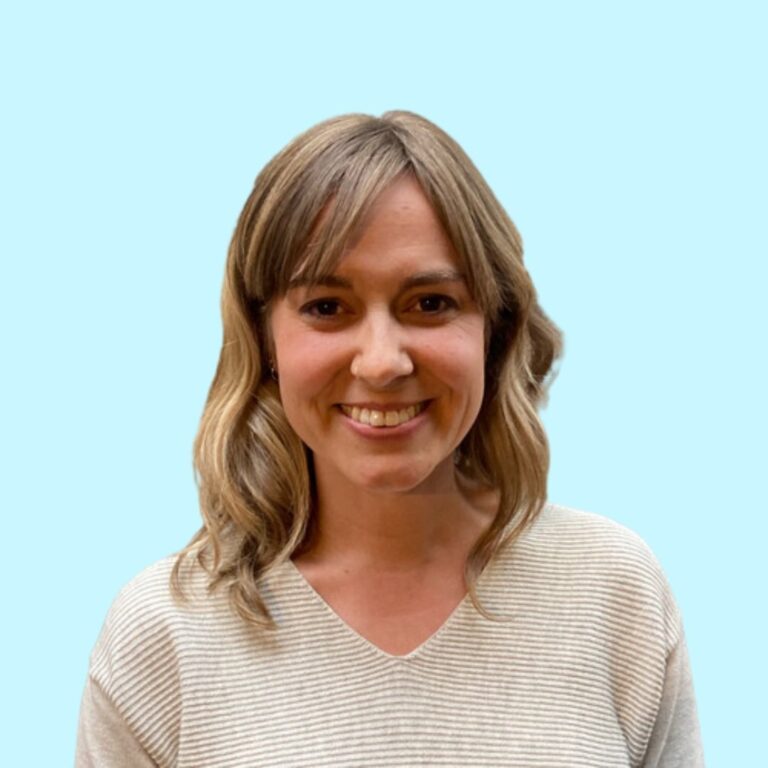

Christopher Bentley
How long have you worshiped at Saint Philip’s?
I first came to Saint Philip’s on Christmas Eve in 2024 with my partner Vanessa. So more than one year now.
What about Saint Philip’s appeals to you?
A lot of different elements. Music is important to me but it’s not just that. It’s also how I was welcomed.
And the reverence of the liturgy. It recognizes the deep history of the church and while it’s new to me it also feels familiar.
The spirituality seems steeped in the building itself which is also pretty incredible.
Were you raised in a faith tradition?
I grew up in the Church of Jesus Christ of Latter-Day Saints. Both sides of my family go back to the early Mormon church in the mid-to-late 1800s. I have ancestors who died while pulling handcarts across the plains to get to Utah.
How does your family feel about you joining the Episcopal church?
They’re very accepting. My siblings and I have gone in different directions but we’re lucky to have parents who have accepted us as we’ve become adults.
My brother and his husband who are active Episcopalians were here for my baptism on November 9 last year. (Staff member, Mo Owen, was my sponsor.)
My parents want the best for me and I think they’re happy that I’ve found a place where I feel like I’m growing and I’m connecting to God and a community that worships together.
Why the Episcopal church?
Good question. I knew the church through my brother and I attended services in Berkeley and San Francisco when I was living there a few years ago. I’ve spent a lot of time reading and discerning as well. Julia Gatta’s book Life in Christ is wonderful.
But I often just lead with my heart and this was the time and place. The people here, the leadership and parishioners, and the spirit that’s so present…all those things also helped me make the decision to be baptized here.
There are social elements of the Episcopal Church I appreciate and align with. That’s important to me. It’s a welcoming place for seekers of all kinds.
I appreciate that there’s a focus on the mystery of God. An important piece of my faith is the acceptance and love of the divine mystery.
How are you involved at Saint Philip’s?
I help parishioner Bill Donges in the wood shop. We help restore and maintain all that’s wooden in the church. We have a few carpentry projects in the works, as well. It’s satisfying work.
I also assist Mo Owen with the StoryMakers youth formation a couple times a month which is a lot of fun.
What do you do professionally?
My official title is Park Ranger but I think of myself as a storyteller.
Can you elaborate?
The common image of a park ranger is someone who wears a ranger hat, welcomes visitors to a park, and takes care of nature and the park. And that’s all true.
But my specific role is to create an emotional connection between the public—and especially youth—and nature and heritage. I hope this creates stewards who will continue to care for our parks and public lands in the future. Storytelling is a great way to do this.
I’m also a trail administrator and that role is more focused on community development.
How so?
I support and educate communities and organizations in Arizona and California about National Historic Trails and get them excited about working with the National Park Service to incorporate trails into their communities.
What captures your interest about the work?
I have a degree in archaeology and a master’s degree in anthropology—subjects that use a lot of interpretation and benefit from storytelling. This comes in handy when connecting people to nature and culture in our national parks and trails.
Being a park ranger is very mission driven; the goals are idealistic. I love that and I hope my efforts encourage people to want to protect public lands and become good stewards.
I’ve always had a passion for nature and history, and especially where they intersect. I kind of stumbled into this career but looking back it makes sense that I’ve landed where I have. I’m also looking forward to what’s next.
Where did you grow up?
I grew up in northern Utah in a pretty rural area. It’s still my home range, and my heart is in that landscape: the Bear River Mountains on the border of Idaho. My love for nature and connection to it as a spiritual space stems from my childhood.
How did you come to the decision to join the Episcopal church?
I’m really glad I was able to have Catechism with Fr Matthew and have had such wonderful conversations with Mtr Taylor and Fr Alex. Leadership here offered great support and were very generous with their time to connect me with the community and help me along this path.
It feels like I’m meeting myself at age 14 and telling that teenager what I’ve gone through and trying to learn from that person what I used to hold so dear.
Can you say more about that?
I was a devout young man. I did the things expected of me in a conservative Mormon community in a small town. But I left the church as a teenager with a lot of anger and resentment.
Much of that has since been reconciled, or nearly so. It’s been a long road to get to where I am now. I can say now that there are some wonderful things I’ve carried with me from that faith.
Questioning is good. I think there should be room for doubt because that’s where growth can happen. But at some point doubt and fear became my armor.
And although a spiritual life always seemed to be knocking I continued to have a cynical outlook on life and struggled to find hope. I think God finds a way to reach us when we’re the most broken.
Your connection to nature brought about the change, correct?
It did. Anyone who loves nature and spends time in it can feel the wildness and the connection to something bigger than ourselves.
For many years, nature has been my spiritual touchpoint. And looking back I think at times I confused God for “wellness”, if that makes sense. I attributed my wellbeing in nature to my actions and my actions alone, like I was in control and the maker of these meaningful experiences. Eventually that just didn’t make sense anymore.
What changed?
It became clear to me that these experiences in nature are God’s attempts to reach me. I feel that God speaks to us through creation. We just have to learn how to watch and listen.
Paraphrasing greater thinkers than I: God’s truth is inscribed in scripture and God’s voice is proclaimed in nature.
What’s one of your core values?
Simplicity is one that I hold pretty high. I love St. Francis and his radical example. Living simply on this earth and taking only what I need is a generous act for our community and an important element of my spiritual and faith journey.
But I also inherited a collector’s gene!
I can’t pass up records at thrift stores. My office is full of musical instruments, vinyl records, cds, and books and that sometimes feel burdensome.
Where’s the musical interest come from?
My family’s very musical. My mother is a harpist; she taught and played in local orchestras and at weddings. At a certain age my chore was “harp mover.”
I also played clarinet and guitar. When I first went to college I wanted to major in music with a focus on classical and jazz guitar. I still play but mostly for our dog, Skye. She can be a tough critic.
What’s something that you find challenging?
Having the courage to truly live out my values. It’s important to know and understand our values. But without action—and sometimes radical action—those values will always remain aspirational.
I was a shy kid, and am still an introvert (proudly so); that’s who I am. The irony is that I’m in a profession where public speaking is common. I’m challenged regularly to move beyond my comfort zone. I welcome that but it’s still a challenge.
What’s something you know now that your younger self didn’t?
I used to care a lot about what others thought of me, and how I presented myself. That matters much less to me now. For one, I see it’s pretty self-centered to think that people are as focused on me as I am.
God wants me to be my true self. To live a full spiritual life I need to keep figuring out who I truly am and then have the courage to be that person.
It’s been a long process coming to that realization—and I have a long way to go!—but understanding that has changed everything.
What’s one of your guiding principles?
To be attentive.
What’s something you’re grateful for?
So many things. I have a lot of gratitude for what would seem like everyday or simple things, like a vermilion flycatcher on a morning walk or the way the light looks coming through a tree.
I’m really grateful for my partner, for the friendships that I have, and my supportive family.
I feel grateful to live in the desert which I’ve fallen in love with. There’s something about the desert that calls me in. The desert offers me a lot of spiritual lessons.
I’m grateful to have a job that offers a work/life balance so I can spend time traveling, hiking, and backpacking. And time for spiritual retreats and reflection.
What’s one of your super powers?
I’m a good listener and I show up for people I love and who need it.
What’s something about you that friends have said they really appreciate?
Vanessa has told me that my silliness and sense of humor is high on her list of things she appreciates, and friends have said the same.
I grew up the youngest in a family where everyone was funny. I had to work extra hard to get a laugh. Admittedly, it’s not a trait that is apparent right away to everyone.
I’ve also been told that I remain calm in stressful situations.
What’s something you haven’t done that you’d still like to?
I would love to do the Camino de Santiago pilgrimage.
You’re in the middle of a kind of pilgrimage now, correct?
I am. I’m hiking and backpacking the Arizona Trail in passages. It’s a total of 800+ miles; it starts on the Mexico border near Sierra Vista and ends on the UT/AZ border north of the Grand Canyon.
So far, I’ve done the portion from Mexico to just north of Tucson which represents about a quarter of the entire trail. There’s much more to go!
Have you trained for that?
Just lots of walking and hiking! I don’t know where it comes from but I can go long distances on foot. I love walking and moving slowly across a landscape. It’s never a race but I can go for long distances.
What might people be surprised to learn about you?
I learned a language that only about 50,000 people in the world speak.
Please say more!
I joined the Peace Corps when I was 27 years old, and served for two and a half years in Mali as a natural resource management volunteer. I focused on reforestation efforts in the area south of the Sahara in West Africa.
I worked with women’s groups to develop methods to grow and plant trees to combat desertification of the Sahel region; I taught environmental ed classes at the primary school; and, I helped the community find funding to dig a deeper well.
But truly—most of my time was spent under a tree drinking tea with old men and learning the language.
Doesn’t the Peace Corps teach you the language before you’re sent to a village?
It does. I was taught Bambara during the first 3 months of service, which is a trade language in Mali. But when I arrived in the village, the only person who spoke Bambara was my Malian colleague and another guy. Since I would be working with women and children, I started learning their language called Tomokan.
With no one else to talk to—and being immersed in the language—I learned the basics of Tomokan relatively quickly. I wish I still had the facility that I did then.
Peace Corps was a great experience, and truly what the slogan promises: the toughest job you’ll ever love.
What was different after being in Mali for 2 1/2 years?
Overall I felt a real sense of accomplishment. I also feel that I gained so much more than I gave. I left Mali feeling much wiser and I think this was the first time in my life that I understood the difference between wisdom and intelligence.
Some of my closest friends now are the volunteers I served with in Mali. If we’d met in a bar instead of in Mali, I doubt we would have become friends. They approach life differently and feel differently than I do about a lot of things and that diversity of my friendships makes me better.
What have I not asked that you would like people to know?
Not to sound too sentimental but this year at Saint Philip’s has been a transformational time for me and I’m very grateful to everyone. It’s been great to have such support.
People who say hello or recognize me, speak to me, call me in to the community should know how important that is, and I try to extend that same welcome to people I know are new.