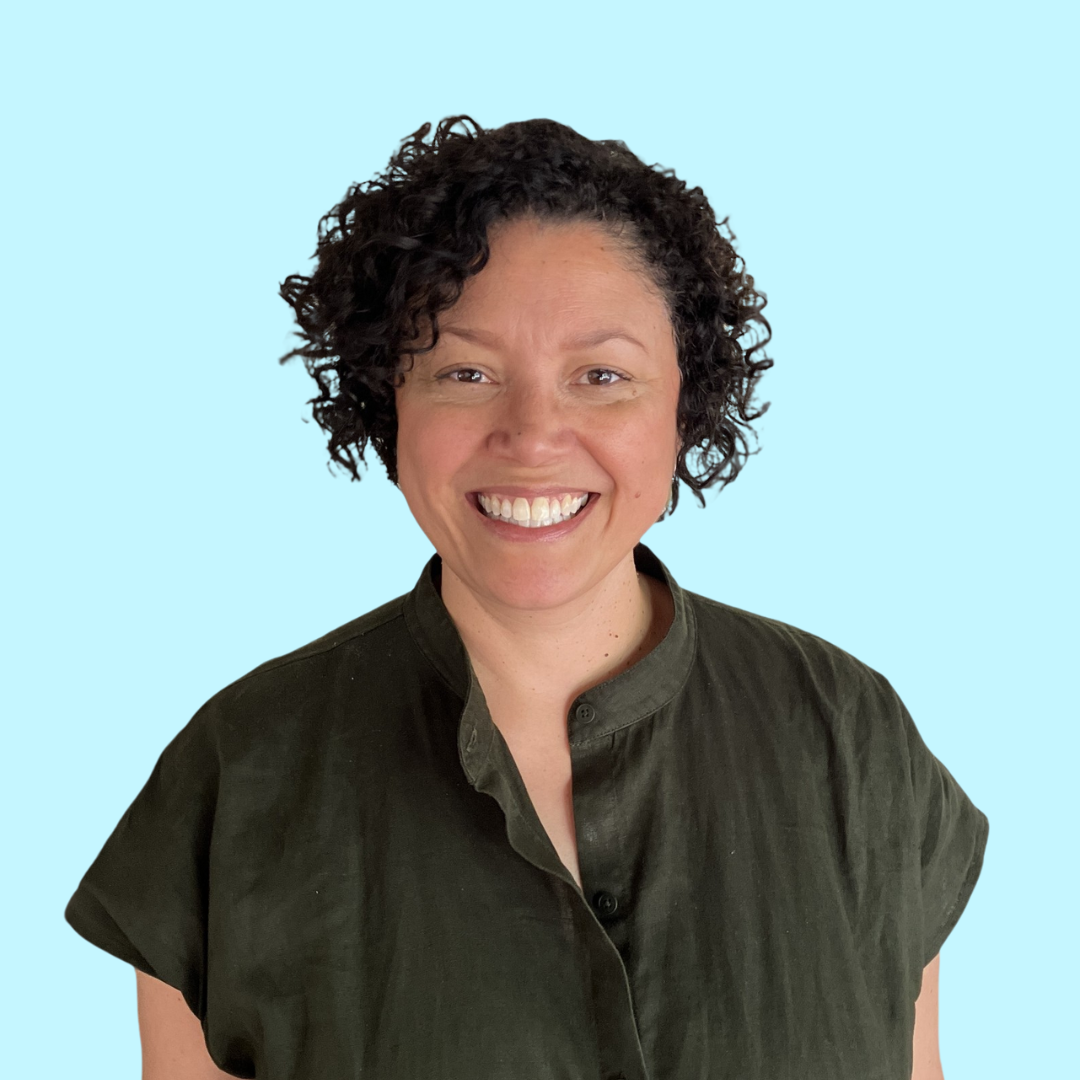
Amy Kraehe
How long have you lived in Tucson?
My family moved to Tucson in 2018 from north Texas. (My husband’s family lives in south Texas). It was a huge leap of faith. We have no family anywhere near here but we trusted that we could build a life here and it would be good. And it is.
Did you grow up in a faith tradition?
My father grew up an Episcopalian. That goes way back to what’s the English line of my family. My mother grew up in a black Baptist church and that goes way back in her family line. But until I was nine years old we didn’t attend church.
It was when I turned nine that we visited different Episcopal churches. My parents talked with my siblings and me about which one felt like the right place for us. We chose the Episcopal Church of Epiphany in Decatur, Georgia, just outside of Atlanta, which is where I grew up.
How long have you worshiped at Saint Philip’s?
Since late last year.
What about Saint Philip’s drew you in?
My husband Angel and I have two boys—14 and 10 years old. Other churches we visited didn’t have a lot of kids. And having a peer community for our children was really important to all of us.
It’s clear that the programming for children is very purposeful; space is made for young people. I’ve never seen an environment—a physical section like the west transept—devoted to children. That sends a good message and makes a strong impression.
And we ended up running into Sally Boeve who we already know. Her son is friends with our oldest son. That was a beautiful connection.
And other families introduced themselves to us. They did it spontaneously—it wasn’t an assigned role they had. That made clear to us that being welcoming is part of the culture here.
What do you do professionally?
Since 2021 I’ve been part of the administration at the University of Arizona’s division of arts. Prior to that I was full-time faculty in a program called Art and Visual Culture Education.
What is that?
In its simplest form, it’s about art education for the public or in the context of a democracy. For example, bringing art into classrooms even if students aren’t training to be artists. Or considering how to serve a diverse public in art museum settings.
There is a visual culture all over our sanctuary that communicates and educates our understanding of God and our relationship to God.
What engages you about the work?
I believe deeply in education. I also love the arts. And in many ways both are underfunded and marginalized in our society.
Within that context I love that I get to do work that (hopefully) makes schools and museums and all kinds of institutions better for more people. That’s ultimately what my work is about.
I look at issues of inequality and how they can be addressed in the arts and arts education. I used to work with elementary school kids but now my work is primarily with grown ups who want to be educators themselves.
You jumped in to volunteer on the Youth Mission Trip this summer. What was that like?
I would do it again! It was really nourishing to spend hours upon hours with our young people, and watch them grow in themselves.
It was challenging physically. And enlivening emotionally and spiritually. It was certainly outside my comfort zone—which is where we often grow the most, right?
What did you learn about yourself?
Because of my career, I’ve spent most of my adult years thinking about what it takes to create institutional change, and building systems that support people. But I haven’t spent a lot of time being engaged directly with the hands-on work of change. That’s different.
During the mission trip, I was asked to do things for which I don’t have skills. Using tools and working in the pantry meant I wasn’t the expert. So I was humbled and had to ask myself how I could still contribute. It invited me to show up and listen to figure that out. It was a really good experience.
What’s a belief that you’ve let go of?
I’m a scholar and researcher who loves knowledge and facts. But I’ve learned that, while they matter, they don’t tell us what we need to do. They can’t be an end unto themselves.
Reading more and knowing more can satisfy my curiosity but neither is guaranteed to help me arrive at the right decision or give me the courage to act.
What does give you the courage to act?
There’s a human and spiritual and heart piece that ultimately moves me—and others—toward change.
Change can be scary and risky so action requires faith that what’s on the other side will be better.
What does your faith mean to you?
I remember learning about Jesus as a child and even then it was clear to me that Jesus was a radical.
The stories of his life and what he represents in relation to God and the Trinity are really powerful and grounding for the work I do on my podcast called Race/Remix. When I started it with my colleagues, one of its goals was to address racial injustice generally and specifically with how artists deal with that in their creative process.
The Episcopal way of presenting Jesus’ life and how we talk about it and our relationship to God and scripture had a profound impact on me. I could have been raised in a different faith tradition and have a very different understanding than I do now.
Attending church every Sunday helps me reflect on my decisions and gives me courage. Jesus’ example is a profound one for me.
What do you do to relax?
My other job is “mom” so there’s not much leisure time. But spending time with our kids—really hanging out with them—is what I do when not working.
They have busy schedules, too, so we let them lead and that takes us to silly places sometimes. The other night my oldest son and I watched a Kpop and demons movie. It was bizarre and fun and led to some karoke which was even more fun.
What’s something you find challenging?
Cooking! Domestic stuff generally is challenging. And things that require patience.
What’s something you’re proud of?
My podcast. I’m very much an introvert so to host a podcast and put my voice out in the world is scary. I’m proud of meeting that challenge and I’m proud of the work. It’s outside my training and anything I ever expected to do.
Can you think of a decision you made that had a big impact on your life?
Leaving home to attend college.
Even as a young girl I planned to go far away to college. Not because I was running away from anything but because I felt that there was so much beyond where I was, and I wanted to be a part of whatever that was.
I had to compromise, though. California was too far for my parents to allow so I went to Wellesley in Massachusetts. I spread my wings and met some of my very best friends who I still have today.
Being away from home those college years very much prepared me to continue to fly after my father died – and after that nest at home no longer existed for me to return to.
An exchange with your father in the hospital is one of your dearest memories.
During my last semester of college I got a phone call. My father was going to the hospital because he hadn’t felt well for some time. Turns out he had viral pneumonia (at only age 51) and was put in the intensive care unit.
He was still conscious when I visited him. It was scary to see him in his hospital gown surrounded by harsh lights and beeping equipment. He hadn’t been told I was coming. He said, “Hey baby. What are you doing here? And where’s your cat?”
Hearing that was bizarre. “Baby” wasn’t a typical nickname for me, and he was tender in a way he wasn’t normally. Those were the last words he said because he was intubated shortly thereafter—and he died a month later.
What did your father’s death teach you?
Since that time I’ve been very aware that it’s important that I celebrate every year I’m alive. That I’ve made it another year is a blessing. I’ve been tuned in to my mortality since my father’s death, and experienced how quickly life can change.
It shaped me into who I am as an adult. My father’s death shattered my unconscious, youthful belief that I wouldn’t be affected by life. My safety net disappeared.
I had to become more independent and make decisions that I not only felt good about but which were solid. I set about building a life that provided some sense of security with the people I chose to bring into my life. I grew up quickly at 22.
What’s something you know now that your younger self didn’t?
How challenging it is to have a successful career while being a parent.
My husband and I met while in college. We got married soon after and I envisioned having a full-time career and four children. Ha!
Having children is really rewarding but two kids and a career is plenty. It’s a full life.
What’s one of your core values?
Justice.
What’s one of your super powers?
I can think big and make connections between what appear to be disparate ideas. I can hold all that and make something coherent—and hopefully useful—out of it.
What’s one of your guiding principles?
I spend a lot of time mentoring young people. I’ve learned how important it is to show up for people and support them—often in ways that are intangible.
What’s something about you that friends have said they really appreciate?
I’ve heard more than once that friends know they can count on me to be honest with them. If you want honest feedback, I will give that to you. I’m a generous person and consider directness (offered with care) a form of generosity.
What’s something you would like to do that you haven’t yet?
I want to learn to surf. It looks challenging but also invigorating and freeing.
I imagine it’s very hard to actually hit the sweet spot where the earth, the water, my body, everything works in concert so that I can glide. The phenomenon of flow.
I found a group of 40+ novice surfers in San Diego. I just need to figure out when I have a long-enough break to go.
What’s a fun fact about you?
I love roller skating. Not inline. I’m all about the four wheels that light up. It’s been decades but….