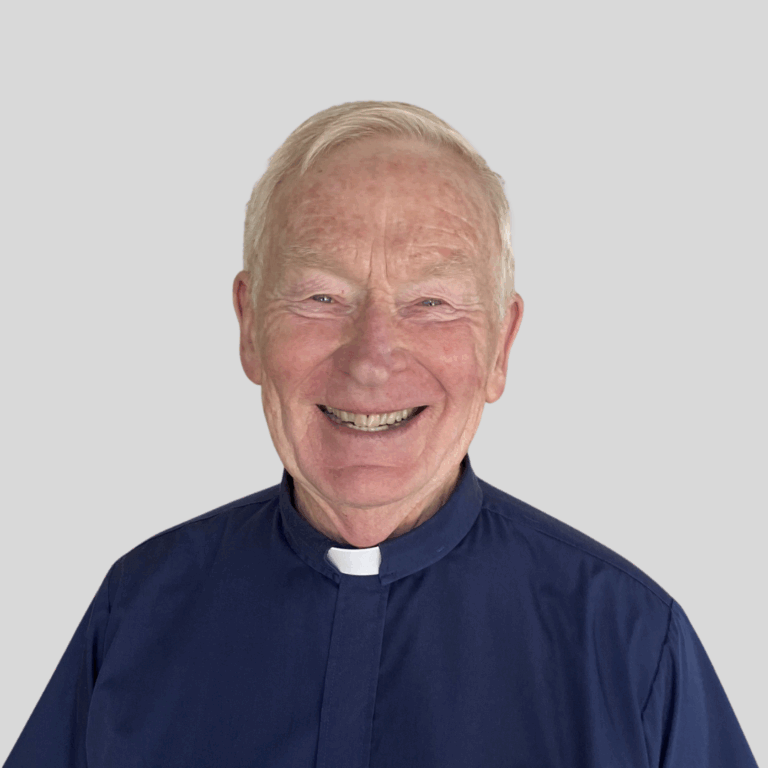

From the Interim Rector
Dear friends in Christ,
After seminary, I enrolled in a psychoanalytic institute in New York City to become a psychotherapist. In conjunction with Andover Newton Theological Seminary, I received a doctorate of Ministry degree in pastoral counseling. For my doctoral paper, I wrote on the subject of narcissism, its origins and its treatment.
This diagnostic category has been much in the news of late. Two theoreticians have been prominent in framing its understanding: Otto Kernberg and Heinz Kohut. Kernberg sees the disorder as rooted in a fundamental split between a grandiose false self and a deeply devalued, rageful interior.
The narcissist relates to others not as persons but as objects—to be used, idealized when useful, and discarded when not. Beneath the grandiosity lies envy and rage at others who appear to possess what the narcissist cannot internally sustain. This is why narcissists so reliably destroy what they claim to prize.
Severe narcissism is marked by antisocial and sadistic traits. He or she derives pleasure from seeing others humiliated, which feeds the inner drive.
Kohut sees developmental arrest as the seedbed for this malady. The young child is not adequately mirrored because parents or caretakers lack attunement and empathic reflection that permits the development of a cohesive self. This failure and lack of reliable and accurate relating induces something close to existential assault. A person then begins life feeling annihilated. Both theorists agree that the narcissist cannot truly encounter another person as a person.
Every spiritual tradition worth its salt emphasizes the need to move beyond the defended self toward genuine encounter: with God, with others, with reality as it is. The arc of contemplative spirituality upholds the liberation from compulsive, reactive self-protection as the very grounding of prayer.
What spirituality requires, narcissism systematically forecloses:
The genuine encounter—impossible when others are objects. You cannot love what you do not see.
Self-knowledge—the narcissist’s interior is a fortress. The entire personality structure prevents access since actual contact would mean assault. Confession or self-disclosure requires the courage to be seen. The narcissist can perform self-disclosure as spectacle or manipulation but cannot inhabit it.
Mercy—this essential human capacity is not available to the narcissist since his own vulnerability is walled off, so he has no access to this dimension. An Episcopal bishop once asked the President to have mercy. Such a request was unintelligible because mercy, to be comprehended, requires a self that has known its own need.
Gratitude—this experience requires the recognition of what one receives from others, from Life, from God. The narcissist’s world is one of entitlement and extraction; gratitude would require the acknowledgement of insufficiency that the entire structure refuses.
The servant leadership tradition, rooted for Christians in Mark 10:42-45, the foot-washing in John 13, and the entire kenotic trajectory of Philippians 2 is precisely inverted. Where servant leadership empties itself for the sake of others, narcissistic leadership fills itself through others. The institution becomes a vehicle for personal aggrandizement; followers exist to reflect the leader’s greatness back to him; dissent is experienced as existential assault and punished accordingly.
The narcissist surrounds himself with cult followers, “yes men,” and “yes women.” At some level, he/she knows that all the adoration is phony, but has no clue that there is another way of being authentic. Like the character in the Greek myth, Narcissus remains transfixed on his reflection from the pool—a lonely, isolated existence indeed. In one ending, Narcissus falls into the pool and drowns, and in another, he wastes away into death.
The Joseph story in Genesis is the story of a narcissistic young man so full of himself that he flaunts his superiority to his brothers. They gang up on him, sell him into slavery, and he ends up in Egypt, and then goes to jail. He uses his suffering for healing.
Richard Rohr, the Franciscan priest, notes that human transformation only results from either suffering or love or both. Joseph was one of the fortunate. Instead of embracing the victim position, which would have locked him into self-righteous bitterness, he allowed his new circumstances to become his tutors, his teachers.
The unhealed narcissist, the untransformed narcissist, will crash and burn. With all that rage and venom, he will happily take down those associated with him. He will gladly inflict suffering and harm upon others. Why should they get off so easily? He will take down the institution that he leads.
In the last chapter of Genesis, we read of Joseph’s reunion with the brothers who wished him dead. In that scene, he is a forerunner of Jesus on the cross and he is a forerunner of the father in the prodigal son parable. Joseph to brothers: “Don’t be afraid… Don’t you see, you planned evil against me but God used those same plans for my good… He reassured them, speaking with them heart to heart” (The Message).
Jesus on the cross, heart energy for his killers. Father of the self-destructive son, heart energy for him no matter what. “Heart to heart” does not exist for the narcissist. At some level, he knows he lives in a self-created living Hell and has no idea of escape. To even contemplate an exit would mean a verdict of loser.
Your fellow traveler,
—Richard Mallory