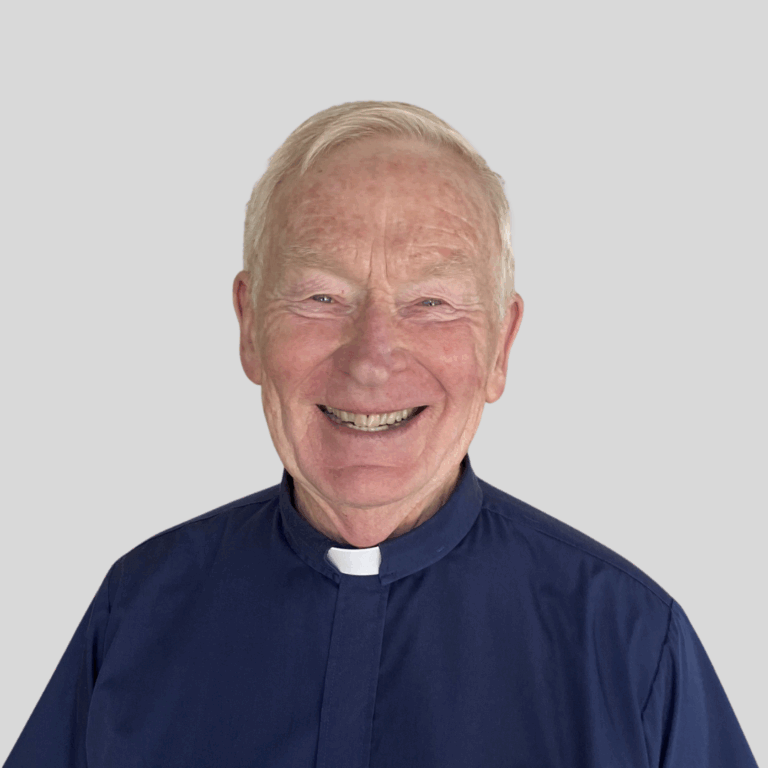
Kathleen Hayes
How long have you worshiped at Saint Philip’s?
7 years—ever since I bought my house in Tucson.
I started out as a snowbird but eventually moved to Tucson full-time.
What prompted your move?
Managing two houses became too demanding. And I also found it very hard to move between two communities; I wasn’t fully connected to either.
I’d been in a little town called Hawley on Lake Wallenpaupak in the Poconos for 20 years, so I made the decision to sell that home slowly. That allowed me time to build friendships here before moving to Tucson full time.
Were you raised in a faith tradition?
I’m a cradle Episcopalian. My mother was a church organist who took me to church, so I had the liturgy memorized by the time I was five years old. It’s embedded deep down in me.
How did that become clear to you as an adult?
After one particularly trying day at work in NYC, I left the college and thought, “What am I going to do?” At the time I was a paid singer at the Riverside Church in Manhattan.
But I walked into an Episcopal church that had a 5:00pm weekday Eucharist. It used the 1928 prayer book for that service—the one I had memorized as a child.
The tears rolled down my checks and I realized, “This is home. This is where I feel the ground of my being.” Not just because of the liturgy, but also because of the deeper connection with God that had been calling me my whole life.
What brought you to Saint Philip’s?
Having been both an organist and a paid singer, I knew an Episcopal church would have the best music.
Saint Philip’s was my first stop on what I expected to be a search for the “right” church for me. But after my first visit, I spoke with the Director of Music, Justin Appel, and asked if he could use another soprano. I knew I didn’t have to visit any other churches.
How are you involved in the parish?
During my snowbird years, I sang with the Canterbury choir. But now I sing in the choir and participate in the women’s book group, The Sower’s Circle, and also serve on the Vestry as its Secretary.
What did you do professionally?
After getting my Masters in Library Science, I applied to the Peace Corps but didn’t hear back from them. So I applied to the Jesuit Volunteer Corps and was asked to run the library in a Jesuit boarding school for Yupik Eskimo children in St. Mary’s, Alaska.
(I eventually heard from the Peace Corps in March of that year, asking me to set up school libraries in the Caribbean! But I was very happy at St. Mary’s, and stayed in the village for three years.)
What was that experience like?
It was quite transformative because the culture was definitely not that of the lower 48. As a young person that was a real eye-opening experience.
The other volunteers and I lived in a village of 200 people. There wasn’t any running water, and the only way in and out was by plane. There was a single telephone with a party line that tied 12 villages together. Instead of tuition, parents would give us moose or salmon.
What’s something you learned from your time there?
It wasn’t always easy living in a very isolated community, so I learned a lot about getting along with people—some of whom became friends for life.
I learned how important silence was for my prayer life. And I learned to cross-country ski and fell in love with Eskimo dancing.
What did you do next?
I moved to Port Townsend, Washington to run a federally-funded project that provided public library service to Jefferson county which didn’t have a public library district.
At the end of the grant period, I organized and supported the ballot initiative that asked voters to approve the formation of a library district. It passed, and the library is now a hub for that rural community,
Is there a theme that carries through your different professional posts?
Yes. Throughout my professional life, I worked to support children and their families and teachers.
As a public children’s librarian I wrote a grant that provided public library service to all the daycare centers in the county.
After getting a Masters in Early Childhood Education, I served on the faculty at Bank Street College of Education in New York City for 20 years. I taught four and five year olds in the lab school, taught graduate students, worked as a staff developer with public school teachers in Newark, NJ and Albuquerque NM, and was a consultant to Macmillan-McGraw Hill. I helped them develop curriculum materials for early childhood classrooms.
While at Bank Street I also worked as a consultant for the Soros Foundation to provide teacher training in the countries of the former Soviet Union. With a colleague I also developed a parenting program that is still in use in over 30 countries in Eastern Europe and Central Asia.
When I left Bank Street, I became the editor of Highlights High Five, High Five Bilingue, and Highlights Hello. I loved working with authors and illustrators to create magazines that reached millions of children here in the United States and abroad.
What’s a belief you no longer have?
I grew up in the 50s and 60s with a pretty stereotypical notion of what was ok for a girl to be—and not to be. I had a long journey in learning to let that go.
When have you taken a leap of faith?
So often! Throughout my life I’ve had times when it felt like I was on the high dive. I was terrified to dive but then told myself, “Just jump!”
Moving to Alaska. Moving to New York City. Traveling by myself to Mongolia or Kenya. Working in the slums of Nairobi and Bangladesh. Making a friend with someone I never thought could be my friend.
So many wonderful experiences required that I take a big leap of faith. And each time, I was so glad I did!
What’s one of your guiding principles?
At some point in my life I began to understand that what matters most is kindness. I strive to be kind.
Is there a new habit you’re trying to cultivate?
I’ve joined a meditation group that meets every morning at 8:00am for 40 minutes via Zoom. I’m finding it helps my prayer life to be in community with others as I meditate.
What gets better as you get older?
The ability to look at things from a much broader perspective.
Why do you think that is?
I think that the longer I live the more comfortable I’ve become with who I am. I’m much less worried about myself, and that allows me to see the world and people around me with a much broader and kinder perspective.
What’s the impact of that shift?
I’m less anxious and feel more grounded.
You’ve lived in many different places. How do you feel about the desert?
I’ve loved every landscape I’ve been in: the vastness and stillness of the Arctic tundra, the crowded streets of Manhattan, the views of Puget Sound from my log house on Bainbridge Island, the trees and hills in the Poconos, and the rolling wheat fields near Walla Walla.
And now, in Tucson, the beauty of the sky with the gorgeous clouds and sunsets, the amazing plant life, and the wide open horizon all make my heart sing.
Do you have a guilty pleasure?
I learned from my mother (who learned from her mother-in-law) how to make hand-dipped chocolates. They’re really, really good!
A long list of people now expect them at Christmas. But sometimes I make a batch and save lots just for me!
I’ve also been known to binge-watch streaming series on PBS, BritBox and Acorn.
Is there a rule you break regularly?
I don’t have as many rules as I used to. Let’s leave it at that!
Is there something unexpected in your life right now for which you’re grateful?
After living in New York City I’m surprised—and very grateful—for the rich cultural offerings here in Tucson like the Rogue Theater and the Tucson Symphony.
I’m also very grateful for Civano —the wonderful, planned community where I live.
What’s a life lesson you keep being invited to learn?
To be kind to myself.
What’s something you’re working on right now?
To be as authentic as possible—not hide. I would say that’s a work in progress.
What do you do to relax/replenish yourself?
I swim half a mile most days, read, and play music.
Watching my part-Bengal cat, Grace, is also relaxing because she forces me to stop whatever I’m doing and pay attention to her.
What’s something you’re proud of?
I might be proudest of the moment when I accepted the invitation to be a librarian at St. Mary’s in Alaska. I wasn’t a person who felt comfortable leaving home, and saying yes stretched me very far out of my comfort zone. It’s one of the reasons that experience was so transformative.
What’s something you know now that your younger self didn’t?
Oh gosh. So much! A big lesson I’ve learned is that it’s ok to make mistakes, and that my worth doesn’t come from what the world tells me; it comes from within myself. And that it’s really ok to cry; my younger self didn’t know that.
What’s one of your super powers?
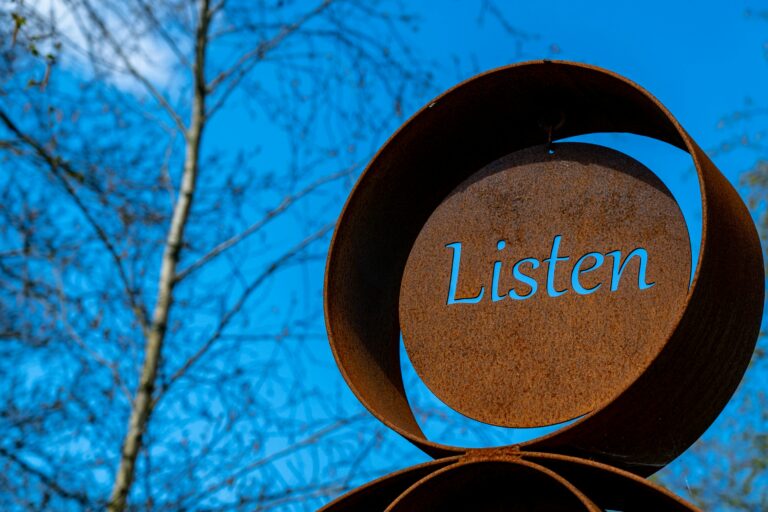
Listening. I’m learning to play the harp for hospice patients. The goal is to focus on the patient and not worry about getting all the notes right and to improvise. This takes the focus off myself and allows me to listen deeply to the person I’m with.
I also think you have to appreciate silence to become a good listener. That was set in motion for me while in Alaska. I loved the silence of the tundra. There was something about it that was so deep and called to me.
And when you teach four and five year old children you really have to learn how to focus and listen! Over the years, I think I’ve become a better listener.
What’s something you share with your friends?
I’ve learned to tell them how precious they are to me and why.
What’s something you haven’t done that you’d still like to do?
Visit Bhutan. A very good friend lived with ovarian cancer for nine years before she died. While sick, she was invited to give a paper in Bhutan. She asked me to go with her but I couldn’t. She had traveled all over the world and after visiting Bhutan told me it was her favorite place. As I helped her plan her funeral, she asked me to promise I’d visit Bhutan.
Earlier this year I met some people who traveled there recently. They shared the name of their guide with me so I may very well make that happen!
What’s a fun fact about you?
My time with the Soros Foundation allowed me to learn from and work with people all over the world. I began traveling alphabetically: Albania, Armenia, Azerbaijan, Bangladesh, China, Denmark, Georgia, Kazakhstan, Kenya, Latvia, and Mongolia.
What have I not asked that you would like people to know?
I’m very much an introvert who has become a learned extrovert. Entering a large parish like Saint Philip’s can be intimidating, but my experience is that people here are very friendly.
There are lots of different ways to get involved so be willing to say hello. There’s no telling where a conversation might lead.