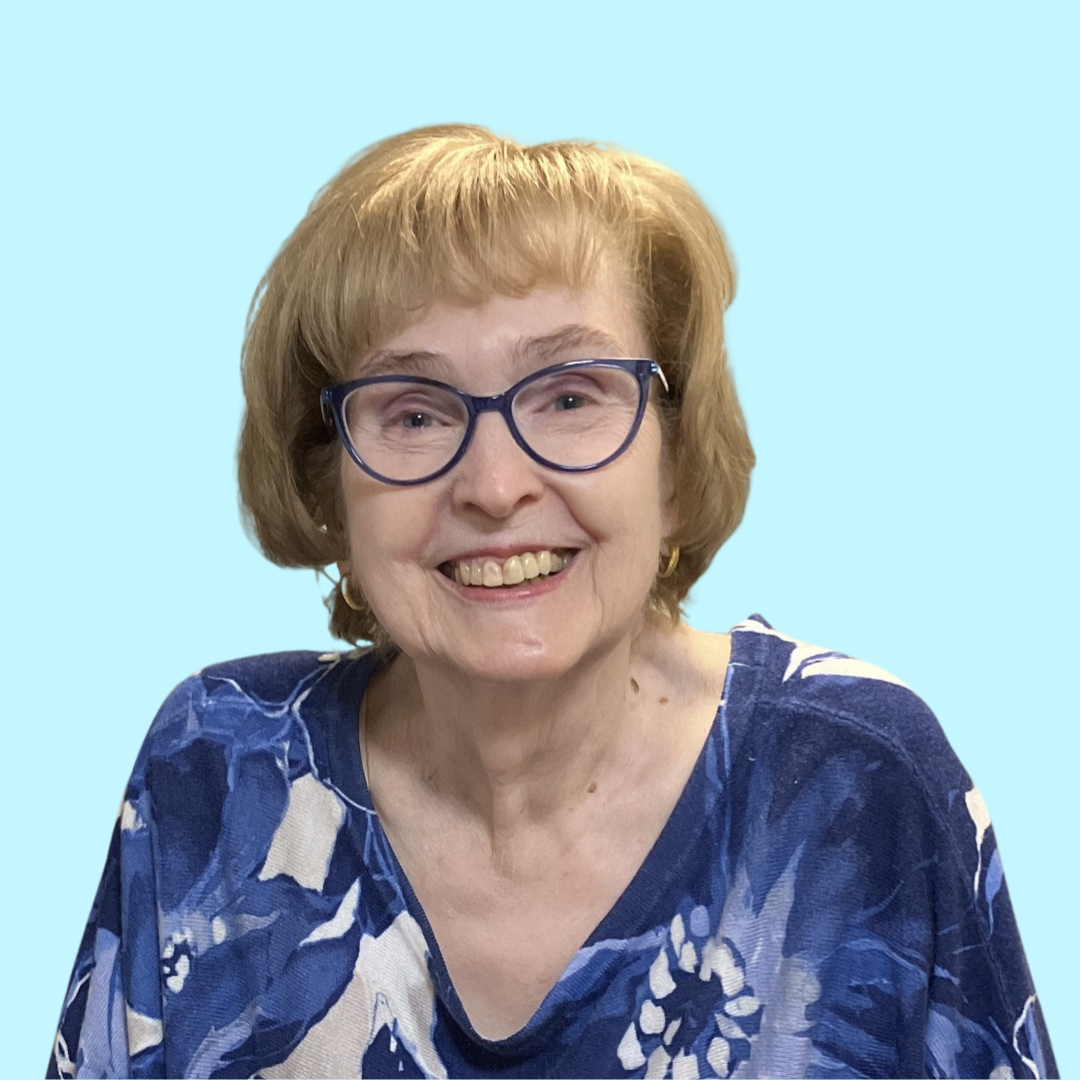
Rita Smalling
How long have you worshipped at Saint Philip’s?
Since 1995 when my husband, Craig Perkins, and I moved to Tucson.
What’s kept you at Saint Philip’s?
I think the liturgy is done beautifully here. And the music is wonderful.
Were you raised in a faith tradition?
Very much so. My family was part of the Methodist Church which has a tremendous emphasis on social outreach.
How have you been involved at Saint Philip’s?
I used to be very involved with Outreach, and because I have an MBA I was also on the Finance Committee. At the time I was the only woman but I was welcomed.
I was always impressed with how seriously the committee members took their work.
What did you do professionally before retiring?
I was a banker in New York City.
Did you set out to do that?
Not at all. I went to school to study history and to become a teacher—and I did both.
First I went to Wellesley College from my home state of Indiana to major in history. I then attended Columbia Teachers College, got a Masters, and then returned to Massachusetts. I worked simultaneously as a high school teacher and a community college professor.
I got married, divorced, and returned to New York City where I did various things—none of them particularly notable.
And then I met the love of my life who inspired my next path.
Please say more.
When I met Craig I was working as a paralegal. I told him I hated the law but loved the business issues I read about. He suggested I go to business school. So I applied to Columbia, got an MBA, and started to work as a banker. This was in 1979.
What did you do in the world of banking?
I started out working with very large corporations. That was interesting because I like working with people and numbers. But then I was asked to join the private banking side, and that was wonderful because I worked even more with people. I loved it!
What about that did you find so interesting?
Everything! I was able to work with families and learn about their internal issues, individual projects, and the charities they supported. It was very varied.
I worked at Chase and handled some of the Getty business and all of the Rockefeller’s. They were a wonderful family to work with because not only were they easy clients to deal with but they were so philanthropically inclined.
Of course I worked with a team; I was the banker but there was a trust officer, a custody officer, and the family always had 10 accountants on staff in their office.
Can you share a highlight from that time?
One of the thrills of my career was that I founded an international meeting for wealthy families from all over the world. Different speakers were invited and one of them was David Rockefeller. The conference worked out so well that it became an ongoing event.
What’s something you’re grateful for?
My husband. The greatest blessing of my life was meeting him. We both felt that it wasn’t a chance occurrence; it was something that God arranged.
How did you and Craig meet?
We met at a glorified hot dog restaurant called “Zoom Zoom.” Each of us went there alone but we decided to sit together so we could get seated faster.
At the end of lunch he said “Now that we’ve had lunch, why don’t we have dinner?”—which we did a few days later, followed by 31 years together.
You exude joy. Where does that come from?
I was born this way. I’m an extrovert and have been like that since I was a little kid. It’s grace-given, and I’m fortunate to see the sunny side of things even when I get thrown a curve ball.
You were thrown a curve ball in 2006, right?
Craig was diagnosed with stage 1 lung cancer. He was told by his pulmonary doctor and his surgeon that the surgery to remove the cancer would be a non-event. But there were complications during the operation and he died.
How did you deal with that?
It was a terrible shock that took me a couple years to recover from. But in many ways I was in better shape than many other women because we did all our investing together. He kept meticulous records, and I was familiar with what to do.
During your career you tried to help other women prepare for such an event, correct?
I had clients who were afraid to write wills because they thought doing that meant they would hasten their death. They really believed that.
That meant that often their widows didn’t know anything about their finances. I would encourage my male clients to inform their wives about where the records were and to let us plan so they would know what to do. I tried really hard to help future widows.
I’ll never forget one widow whose husband shared no information with her. She was so hurt that he would treat her that way. She wasn’t scared about not having money. She felt bad because he didn’t involve her and a consequence was that she had to run all over New York City looking for bearer bonds and learning about different lock boxes. She said it was humiliating.
What’s something you’re proud of?
I’m very proud that after Craig died my step-family and I made a real effort to keep our family together. We are a close family—not a step-family—and I am very blessed by that.
What’s something you keep having to learn?
Not to be anxious. For example, right now one of my daughters is very ill. I focus on turning it over to God and praying. That’s the only way I know how to deal with my anxiety.
What role does faith play in your life?
A big one. I’m very fortunate that I’ve always had the grace in my life to have a tremendous feeling of connection to God.
When I was a little girl we would have potluck dinners at church. I would creep upstairs from the undercroft to the chancel railing and kneel there to pray. I would then return to the dinner.
At one point in grade school I told my parents that I wanted to attend a different church because I wasn’t learning enough about Jesus. Much to their credit they listened to me and we found a church that had a more serious approach—both liturgically and in its preaching.
What’s something you know now that you didn’t when you were younger?
Until I began working I didn’t realize how much of a glass ceiling existed for women.
Wellesley had lots of women professors, the president has always been a woman, and women were highly regarded. I thought that was how it was everywhere. I learned later how hard it is for women to get ahead.
Yet you were successful in your profession. How did you manage that?
I was very persistent. But I had what you would call a middle-sized career. To really rise in the ranks would have required that I sacrifice more than I was prepared to do. My marriage was too important to me and I wasn’t steely-edged enough.
What is something your friends have said they really appreciate about you?
My empathy—which I think comes from being an only child. I’m always looking for sisters, and want to make people my comrades. People tend to come and tell me their problems pretty readily.
You found lots of sisters in college, right?
I did. I went to Wellesley and was surrounded by sisters. Attending Wellesley was one of the great boons of my life.
To this day my best friends are my Wellesley sisters. There are 10 of us that Zoom every two weeks to check in and see what’s going on. We’ve been checking in with each other for 60 years now. It’s wonderful to have that kind of connection.
Do you like to travel?
I’ve been on every continent except Africa and Antarctica. And I’ve been to Italy 16 times.
Is there a travel adventure that you remember especially?
I went to Pakistan for the summer in the 1970s on a Fulbright grant. Government contacts resulted in an invitation to take a ride in a small commercial plane into the Hindu Kush mountains.
The pilot invited me to ride standing in the cockpit holding on to the back of his seat and the co-pilot’s. It was the thrill of a lifetime as we shot through the mountain passes, twisting first one way and then another up to the tiny town of Gilgit. No travel adventure I had after that ever matched that one!
What are some of your hobbies?
I play Mah Jongg, and I belong to the Barnard College Book Club. Its members were kind enough to let me be part of it even though I didn’t attend Barnard.
What’s one of your super powers?
I think my ability to reach out to people when I see they’re having problems.
What’s one of your core values?
Kindness. That trumps everything else. For example, a woman with whom I clash politically confided in me that she has some medical issues. I pray for her every night. I wouldn’t not do that because of her political views.
What’s one of your guiding principles?
Prayer connects us to each other.
I’m a member of the Society of the Companions of the Holy Cross. It’s a special group of women, and our number one vow is intercessory prayer.
You also write prayers, correct?
I like writing prayers. Here’s one that was published for the Companions:
Infinite Mystery, lead us forward in the paths of justice for all your people, which alone can lead to peace and reconciliation among us. Let us ever remember that there is no peace and reconciliation possible unless we let justice lead our mind, hearts, and hands.
What’s something you’d like to do that you haven’t done yet?
It isn’t likely to happen but I would love to learn how to swim. I have a terrible fear of water because I almost drowned when I was six years old.
My mother was holding me in her arms as she walked into the Florida surf. The undertow took us out to sea and we would have been lost but for a man who jumped in and brought us back to shore.
I’ve had many swimming lessons—and can float beautifully. I can also doggie paddle but that’s not really swimming.