
From the Rector
Dear Friends in Christ,
As many of you are aware, the recent military strikes on Iran have raised profound questions in our hearts, minds, and prayers.
Several of you have asked how our Christian faith—rooted in Scripture, prayer, and a long theological tradition—might help us think about such events. Rather than offer a definitive answer, I want to reflect with you on how we can faithfully and prayerfully discern how to respond, both in our personal convictions and in our common life as followers of Jesus.
Let us begin where we always should: with prayer and humility before God. The Collect for Peace in the Book of Common Prayer offers us these words:
“O God, the author of peace and lover of concord,
to know you is eternal life and to serve you is perfect freedom:
Defend us, your humble servants, in all assaults of our enemies,
that we, surely trusting in your defense,
may not fear the power of any adversaries…”
This prayer names both the reality of conflict and the call to trust—not in violence—but in God’s defense. It invites us to hold peace and security together, not as opposites, but as gifts we seek from the same source.
A Christian Case For Military Action
Christian support for military intervention often draws from the Just War tradition—rooted in the thought of thinkers like Augustine and Thomas Aquinas, and affirmed in various forms in both Catholic and Anglican theology. Just War theory does not glorify war but seeks to limit it, asking whether the use of force is a last resort, undertaken by a legitimate authority, in response to a grave injustice, with a reasonable hope of restoring peace and protecting the innocent.
Some Christians may argue that if the strikes on Iran were aimed at preventing greater harm—such as the development or use of weapons of mass destruction, or imminent attacks on civilians—then they may meet the criteria of a just war. Romans 13:4 speaks of the governing authority “as God’s servant for your good,” not bearing the sword in vain. This view sees the state as having a responsibility to restrain evil and protect life, even by force if necessary.
Dietrich Bonhoeffer, the German Lutheran pastor and martyr, wrestled deeply with these questions. Though committed to nonviolence in principle, he ultimately participated in a plot to kill Hitler, believing that to do nothing in the face of evil was itself a moral failure. His witness reminds us that even in complex and tragic choices, we are called to act not in self-righteousness but in repentance, acknowledging the limits of our moral clarity.
A Christian Case Against Military Action
On the other hand, many Christians—especially in the early Church and in various modern traditions—believe that war is fundamentally incompatible with the Gospel. Jesus says plainly in the Sermon on the Mount, “Blessed are the peacemakers, for they shall be called children of God” (Matthew 5:9). He commands us to love our enemies and pray for those who persecute us (Matthew 5:44). The cross, not the sword, is the mark of Christian faithfulness.
From this perspective, military strikes—even if justified by worldly standards—often deepen cycles of violence, destabilize nations, and endanger the very lives they claim to protect. Peace is not merely the absence of war, but the fruit of justice and right relationships. The Church is called to be a foretaste of God’s peaceable kingdom, not a participant in the politics of vengeance or empire.
The Episcopal Church, as part of the Anglican Communion, does not offer a singular political position. Instead, we embrace what might be called a “middle way”—one that encourages moral seriousness, communal discernment, and faithfulness to the teachings of Christ. Our Baptismal Covenant calls us to “seek and serve Christ in all persons,” including our enemies, and to “strive for justice and peace among all people.”
A Call to Discernment
So where does this leave us? It leaves us, I believe, with a responsibility to pray, to listen, to seek wisdom, and to engage one another with humility and compassion.
People of good conscience can wrestle and disagree on these crucial issues and our common life is rooted in a pursuit of comprehension together which requires all of our shared wisdom and prayer.
As your priest, I do not presume to tell you how to vote, or what to think about every political action.
But I do urge you to let your faith be the lens through which you consider these events. Let your heart be formed by the words of Jesus, your mind shaped by the prayer of the Church, and your conscience guided by love of neighbor and reverence for life.
Let us pray for our leaders, for the people of Iran and Israel, for our soldiers, and for all victims of violence. And let us pray for the courage to be instruments of justice and peace in a world so often torn by fear.
Yours in Christ,
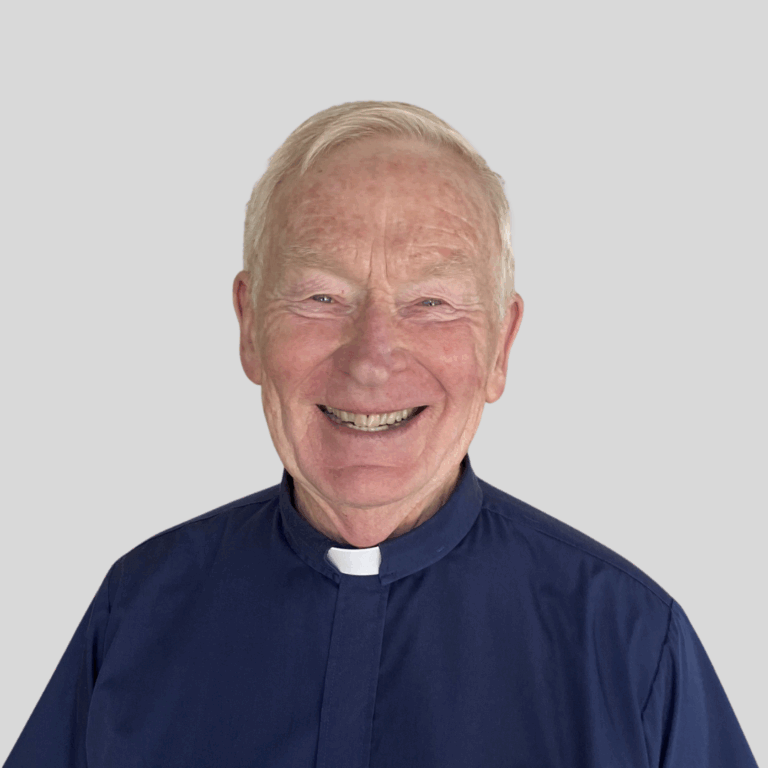
Fr Robert