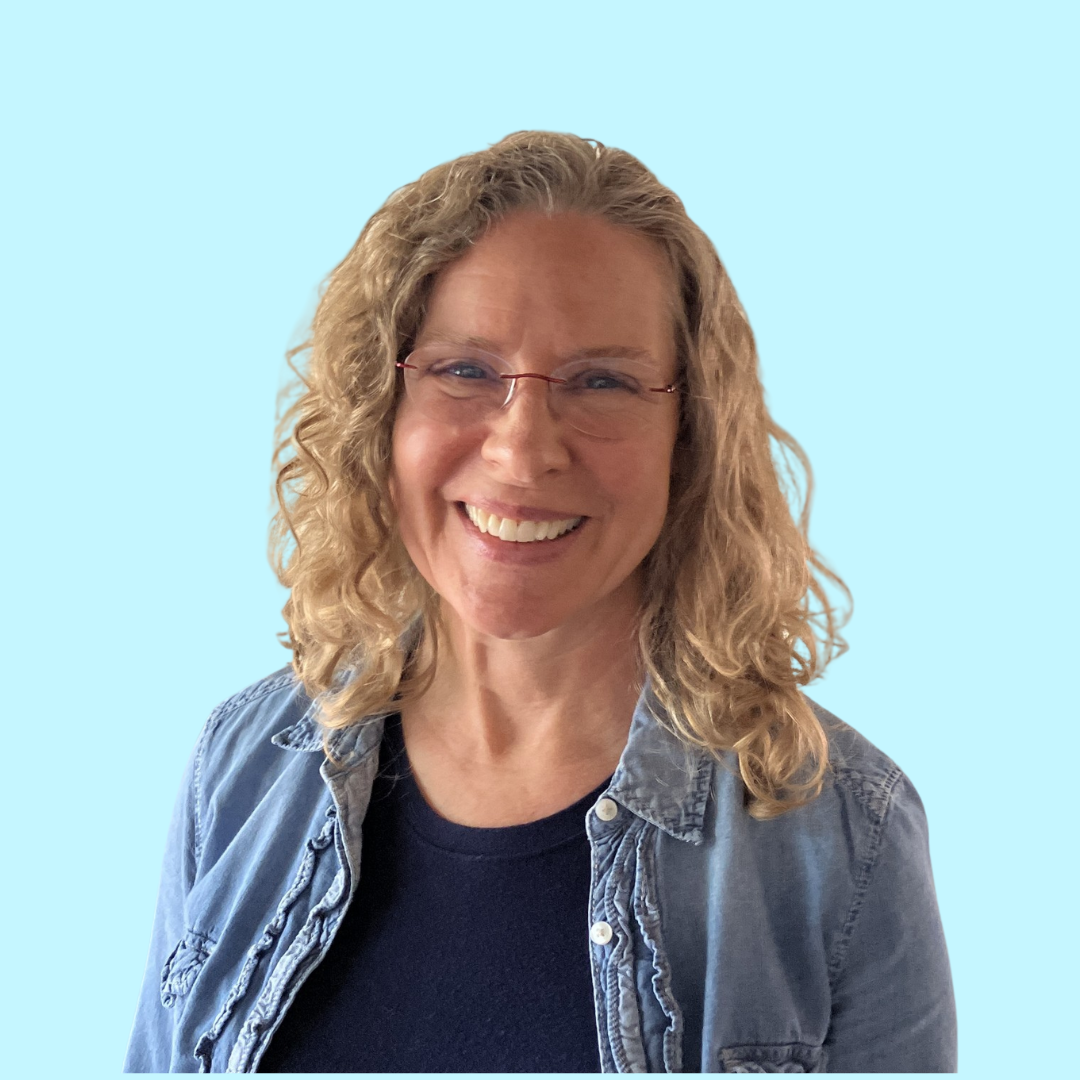
Sherry Sterling
How long have you worshiped at Saint Philip’s?
Since August of 2019
Were you raised in a faith tradition?
Yes, church was an important part of my growing up—everyone I knew was a devout evangelical Christian: my immediate family, extended family, and neighbors.
My early years were at Wheaton Bible Church. We then went to a Baptist church for a couple of years, followed by a Presbyterian church from my fourth grade on.
How did you find your way to the Episcopal church?
My former husband and I attended a small (20 or so people) Presbyterian church in Petaluma, California. The minister would work through the scripture reading for the day using psychological terminology, and that gave me a new perspective, different from the literal evangelical one I was taught growing up.
My experience in the Episcopal church is that questioning is okay. Dialogue is encouraged, and we’re supported when we wrestle with our faith.
I love that not everything is figured out. We are in a conversation with God and others. I believe God is bigger than we can possibly understand. And that God never gives up on any of us.
What brought you to Saint Philip’s?
I lived near Sabino Canyon and rode my bike there on Sundays. On my ride down from the top, I sang hymns—usually just the first verse. Out loud!
I have a hymnal at home and would try to memorize the next verse so that the following Sunday I’d be able to sing more of the hymn. After a few weeks of that, I told myself I could be singing with other people. And here I am.
What about the Episcopal worship service draws you in?
Three things stand out for me. The first is Communion at the altar. Growing up we were offered communion only once a month or so, and we served each other in the pews.
Seeing everyone come up for their weekly portion of bread and wine is very moving. It’s a public statement of our desire for God’s sustenance. Little kids and adults—everyone is welcome, and we line up for it. It feels almost like a bread line.
The second thing I really appreciate is that it’s the same service everywhere in the world. When my partner, Peter, and I were in Sri Lanka, for example, I was able to follow the service, even in a language I didn’t understand. The rhythm of phrases that have become familiar provide a comfort that I know will always be with me.
Another thing I appreciate is that we follow the lectionary for the scripture readings. In the churches I grew up in, the minister chose which scripture to preach on, and sometimes it felt like it was handpicked to make only their point.
How are you involved at Saint Philip’s?
One thing I do is write a monthly Daily Bread reflection. I love that I’m part of a community reading the same scripture for a particular day.
I also attend the monthly women’s book club (called The Sowing Circle), and during the program year I’ve participated in Wednesday Mosaic, Centering Prayer, Former Evangelicals group, and Lenten discussion groups. These have offered a space for connection and conversation.
And in January this year I was elected to the Vestry. I’m honored to serve in this time and in this way.
What do you do professionally?
I’m on my third career; I’m a psychotherapist in private practice. I’m really committed to helping people move forward in their lives.
What were your first two careers?
I was a stay-at-home mom, and helped my then-husband with our printing business. Then I was a ghostwriter and editor. I also wrote leveled readers, to help children learn how to read.
What’s something you’re afraid of?
Being disconnected from those I’m close to—whether because of dementia or simple misunderstandings. One of my core values is connection, so losing it is definitely something I fear.
What’s a lesson you have to learn over and over again?
Forgiveness, of myself and others.
I’m the only one in my family who has left the evangelical church. Having different religious and political views than they do had me feeling on the outside. So forgiving actions that come out of our differences, accepting each other, and finding other ways to connect is the way I’m moving forward.
I suppose my fear of disconnection not resolving itself motivates me to continue learning about forgiveness.
What is an expression of love you’re trying to get better at?
Being the initiator in addition to the responder with other people. I’m more familiar with being in the supporting role.
What’s a quality you’re drawn to that you don’t possess?
Confidence in social situations. You’ll more often see me as part of the clean-up crew rather than out in front.
What’s something you think of very differently than you did 10 years ago?
That I really can financially support myself. Before I began my current career, I was editing and writing part-time, and didn’t make enough to live on from that.
After I divorced, I was able to follow my dream: I went to graduate school in 2008 and eventually earned my psychotherapy license in 2015.
What do you do to replenish yourself?
I love walks in nature, biking, and gardening (getting my hands in the dirt). I also love bird watching. And creating home with loved ones.
Recently, I’ve started to write again and have resumed conscious movement dance.
What’s something you’re proud of?
That my three adult children are doing well. I worried what effect divorce would have on them. They’re all in a good place right now in their lives, so my mom-heart breathes a sigh of relief.
What’s something you’re passionate about?
I love mountain bike riding. It’s my freedom place and where I feel like a kid again.
In my childhood, my family lived in a subdivision where the speed limit was 20 miles per hour, so it was safe to be out and about on our own. I would make a thermos of cool aid, put it in my bike’s wicker basket, and be gone from the house for hours.
I explored the neighborhood, visited a nearby creek to enjoy the quiet and be alone, and rode to the library.
Being on my bike gave me a chance to be independent. I loved the breeze, balancing on the bike, and feeling like I was floating in air. I love everything about being on a bike.
What’s something you find challenging?
Getting enough movement in a day. It used to be easier, but now I sit for hours at a time with my work. I’ve heard sitting is the new smoking, as far as harmful effects on our health. Other therapists joke that this is one of the hazards of the job.
Is there a place that helped form you?
I grew up seeing California as the land of possibility.
When I was in the third grade, my family drove across the country in our motorhome to visit my great-grandmother, from our suburb in Chicago to Ventura, California. I saw the ocean for the first time and was mesmerized by it. I remember the ocean’s smell, its light, the waves, and the moisture in the air.
Our midwest diet was full of casseroles and jello salads. I was the outlier health nut and asked for granola, skim milk, and lettuce other than iceberg. I remember being excited to find “my” foods when I landed in California.
How did the promise of possibility form you?
That’s where I discovered dance and the world of conscious movement.
Body movement that is intentional and exploratory helps me connect to the divine. That was my church after leaving organized religion for a while.
What’s one of your super powers?
Listening carefully to others.
What role does faith play in your life?
It helps make sense of everything. Otherwise what’s the point of living?
The experience of nature makes me believe there has to be a creator.
I’m a relational being so I want to relate to that—whatever that is—as it’s revealed to me and I get to know it. It’s an ongoing journey. Saint Philip’s is a community where I can engage with others who are on their journey, too.
There’s also a need for me to worship. To get to do that with other people and with music and hymns connects me to my lineage in the Christian faith tradition. That gives me a sense of home.