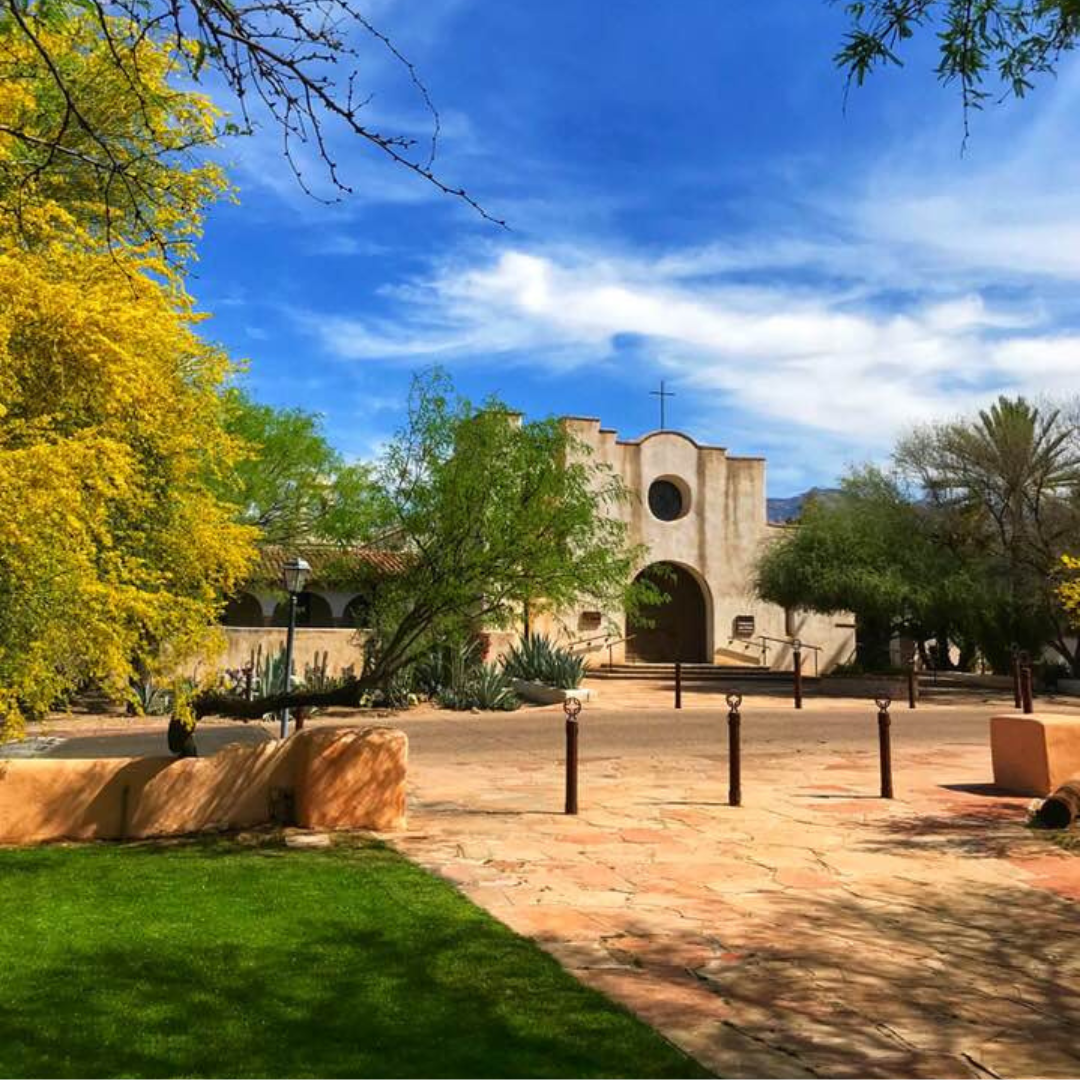
Open space
In addition to providing Saint Philip’s with a grant of $150,000, being part of the National Fund for Sacred Places 2026 cohort opened the door to technical support to determine our parish’s economic impact.
This proprietary research approach was developed by Partners for Sacred Places with funding from the William Penn Foundation and in collaboration with Dr. Cnaan and the University of Pennsylvania’s School of Social Policy and Practice.
It is called the “Economic Halo Effect of Sacred Places,” and it determined that Saint Philip’s has an overall economic impact of $6.6 million.
Over the coming weeks, some of the surprising insights from their study will be shared. Today’s story is about the Creation Care Commission and the Garden Guild in the section of the study termed Open Space.
Open space (quoted from the Halo Effect report)
In some urban communities, religious buildings’ properties may offer the only green space or recreation space that is welcoming and accessible. Access to green or recreation space can be monetized on a per use basis.
In the case of Saint Philip’s in the Hills, open space accounted for over $3.5 million. This is one of the highest Open Space totals staff at Partners has seen.
The church’s carefully landscaped 10-acre campus includes a plaza with a labyrinth, three gardens, a playground/nature area, and a columbarium. It’s a civic asset utilized by a wide range of community members for gathering, walking, play, and remembrance. Together, these spaces get over 1,500 unique uses per week for at least nine months of the year.
If you might be interested in serving on the Creation Care Board, please contact Chair Greg Silva at gregsilva@aol.com. If gardening is your passion, please contact Garden Guild leader Emily Swartz at ehswartz@hotmail.com.