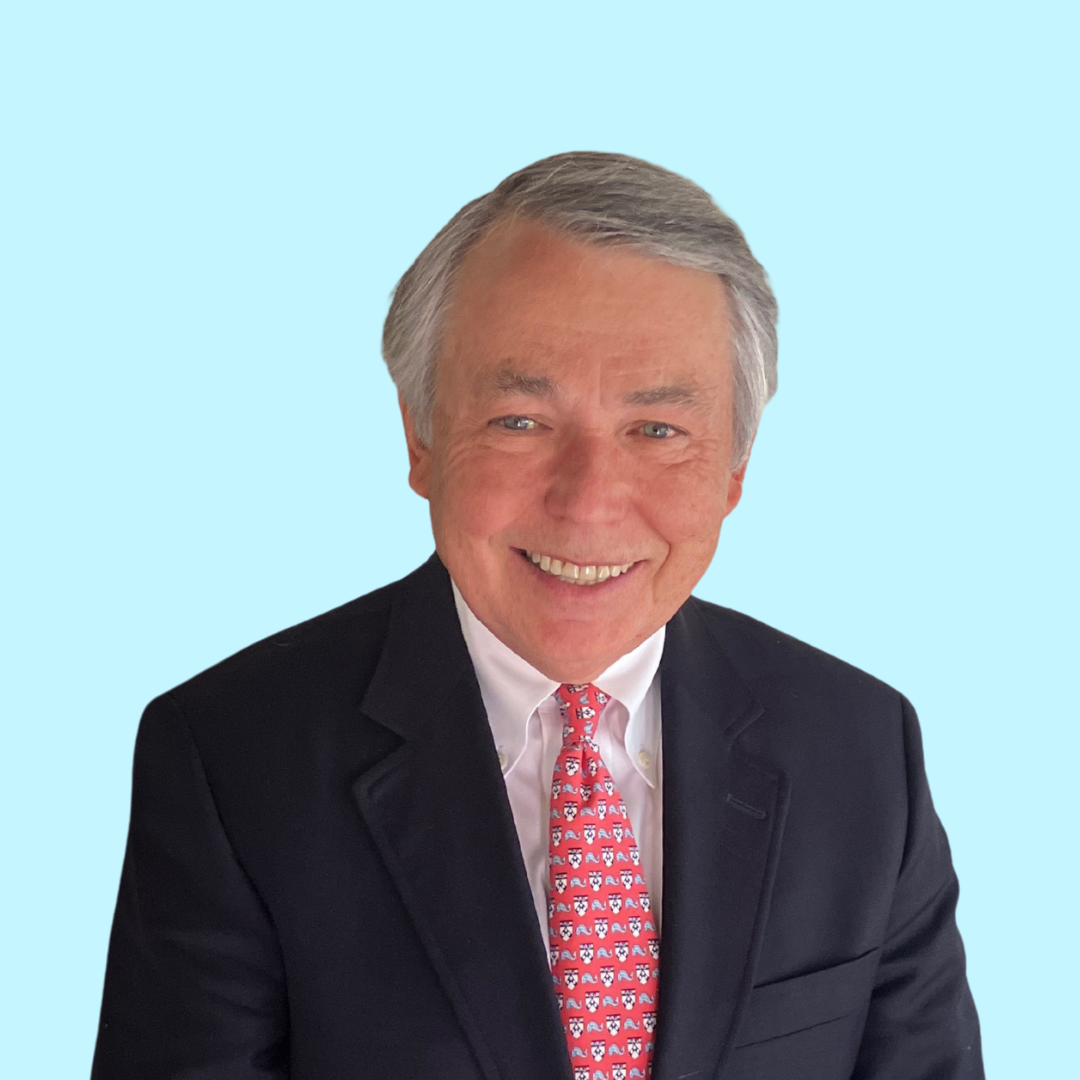
Brad Hintz
How long have you been at Saint Philip’s?
I discovered Saint Philip’s In 2018 when I spent a winter in Tucson. The parish community was welcoming, the chapel of the church was breathtaking, and the music program was extraordinary. I quickly felt at home here.
Were you raised in a faith tradition?
Yes. I was raised Roman Catholic, served as an altar boy, and learned Latin as a child. Faith and church life were an important part of my upbringing.
Like many people, however, my relationship with the Church evolved over time. Although the traditions and core values remained important to me, I gradually became more of an “Easter and Christmas” Catholic in adulthood.
How did you find your way to the Episcopal Church?
Following my divorce, I visited St. Peter’s Episcopal Church in Morristown, New Jersey. It proved to be a spiritual turning point.
The clergy introduced me to the Anglican tradition and the Book of Common Prayer. What impressed me most was the thoughtful atmosphere. Conversations were serious and intellectually engaging rather than doctrinally rigid. Bible study was encouraged.
Of course, I also valued the continuity with the liturgy I had known as a child. Before long, I found myself serving as a lector.
What brought you to Tucson?
I had owned a winter home in Tucson since 2004. After my retirement, I became an Arizona resident. While we were dating, I introduced my wife, Cherie, a resident of Seattle, to the Southwest.
Tucson ultimately offered both of us the quality of life we were seeking to start the next phase of our life together; a medium sized college town with a rich cultural life.
What brought you to Saint Philip’s specifically?
During the early months of the pandemic in 2020, when travel was restricted, Cherie and I spent six months at her home in in Seattle. As soon at the Washington State travel ban lifted, we drove to Tucson.
One month later we were married at Saint Philip’s in a silent, empty chapel by Fr. Peter Helman. The experience created a deep personal connection to the parish. Saint Philip’s has become an important part of both our lives.
How are you involved in the parish?
I serve on the Board of the Ministry Endowment and Funds Trust (MEFT).
The endowment exists to support the long-term mission of Saint Philip’s. A fiduciary’s responsibility is not simply investment performance; it is stewardship. These funds were established to support the parish in perpetuity, which means balancing the needs of the current parish community with the needs of future generations.
What did you do professionally before retiring?
I spent my career on Wall Street in finance and risk management.
I served as the Treasurer and as a Partner at Morgan Stanley. In the late 1990s, I was Chief Financial Officer at Lehman Brothers, and I spent 14 years as an equity research analyst at Sanford Bernstein, covering major financial institutions. I retired from Bernstein in 2014.
Much of my professional life involved assessing risk, protecting institutional balance sheets, and making long-term financial judgments under uncertain conditions.
How did those experiences shape your perspective on fiduciary responsibility?
Financial risk management teaches discipline and prudence. Institutions, like Saint Philip’s, endure through careful analysis, long-term thinking, prudent decision-making, and a willingness to make difficult decisions. A fiduciary is entrusted with the care of assets that serve purposes larger than oneself and far beyond one’s own lifetime. That creates both moral responsibilities to act prudently.
What’s something new in your life in retirement?
Education.
I had studied engineering and earned an MBA from Wharton. However, these are largely quantitative disciplines, and I realized there were gaps in my education.
After moving to Tucson, I applied to the University of Arizona and started over as an undergraduate student. I sat in classes with 21 year olds listening to lectures on history, theology, and classical literature.
In 2023, at age 73, I graduated with a long-delayed Liberal Arts degree, BA Summa Cum Laude. It was one of the most rewarding experiences of my life.
You’re involved in teaching as well, correct?
Yes. After retiring from Wall Street, I became an Adjunct Professor at New York University’s Stern School of Business. I taught financial institution management for 5 years.
I remain involved at NYU as a member of a board that oversees the student-run investment fund. I enjoy hearing the investment pitches made by the young students; they are so enthusiastic.
What’s something you’ve learned over time?
Age and experience teach humility.
During my business career, I lived through the US savings and loan crisis, the Crash of 1987, the Asian, Mexican, and Russian crises of the 1990s, the Internet Bubble, and the Financial Crisis of 2008. Those experiences taught me that unexpected events do occur and that certainty is often an illusion.
I have learned to listen carefully, to pause before reaching conclusions, and to appreciate the limits of our knowledge. I think that has made me a better fiduciary.