From the Priest-in-Charge
Dear Friends,
“Humanity, created by God in all its grandeur, is today facing a pivotal choice: either to construct a new Tower of Babel or to build the city in which God and humanity dwell together. Each generation inherits the task of shaping its own era, of guiding history to become a place where the dignity of every person is safeguarded, justice is promoted and fraternity is made possible. Yet every era also runs the risk of creating an inhumane and more unjust world. Whenever humanity is in danger of marring its true identity, we Christians lift our eyes to the Incarnate God, knowing that it is ‘only in the mystery of the Word made flesh that the mystery of humanity truly becomes clear’.”
—Magnifica Humanitas
Like many priests and pastors around the world, I have recently been working through “Magnifica Humanitas,” the first encyclical of Pope Leo XIV. This lengthy and scripturally rich document, promulgated at the end of last month, grows out of more than a century of Catholic social teaching concerned with human dignity in the midst of enormous technological change. The last Pope Leo (reigned 1878–1903) wrote in a time of steamships, telegraphs, and surging mechanization. This Pope Leo is writing in a time where not only human labor is being threatened, but human nature and thought.
If our words are not our own, if our academic, artistic, literary, and spiritual productions are not our own, where does this leave us?
As a professor, this is of very great concern to me, and many of my colleagues are rapidly returning to the old Blue Books and oral exams. We are interested in student, not machine, learning. But we are up against steep odds.
On the one hand, student plagiarism and use of generative AI has probably never been worse—I have certainly seen this in my own classrooms. But on the other hand, a great many young people, exhausted by constant digital connectivity, weary of their screens, hungry for human connection, are beginning to rebel.
At commencement exercises across the country, graduands booed addresses about the benefits of artificial intelligence. In a colloquium at my own seminary, students sat aghast as a visiting priest talked about his own AI initiatives and how he used AI to help write his sermons. The questions from the floor were brutal.
The reading, interpreting, and preaching of scripture is, at its core, a dialogue between us and God. To interpose a machine into the place of the Holy Spirit is a monstrous thing, and many priests are now signing pledges not to do so. It is better for us to speak imperfectly, but speak for ourselves.
And there are darker ramifications, still. A young soldier asked me recently if, as a Roman Catholic, he should refuse to use AI in war machines, for instance military drones. I told him he should speak to his chaplain and commanding officer. He is certainly not the only person asking this question.
As I think about all this surging technological change I take comfort in God’s changelessness. I take comfort in our living faith, in the ancient rhythms of our corporate worship. I take comfort in the ultimate reality of the risen Christ.
Yours in Christ,
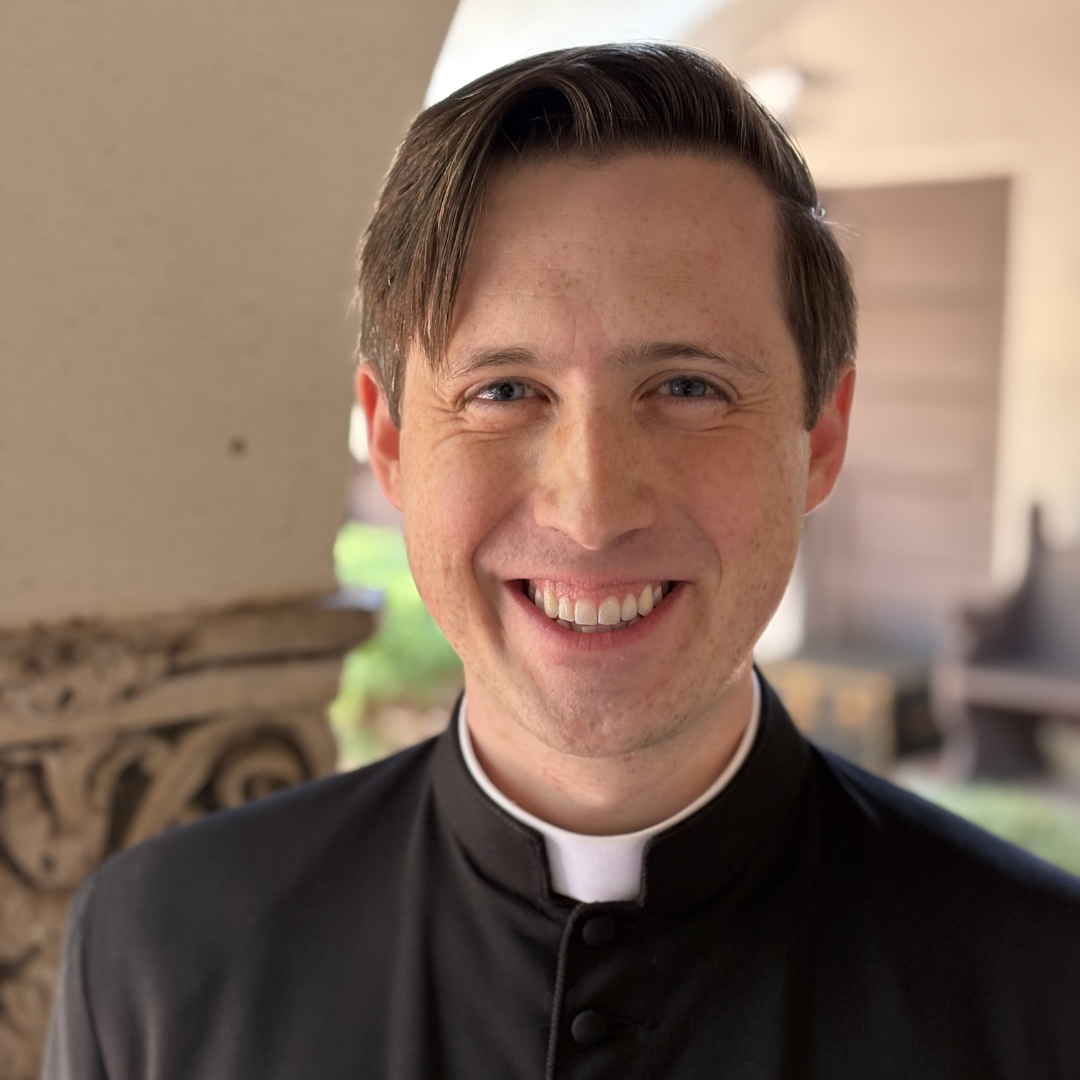
—Fr Matthew